竹北市市東公園減量設計
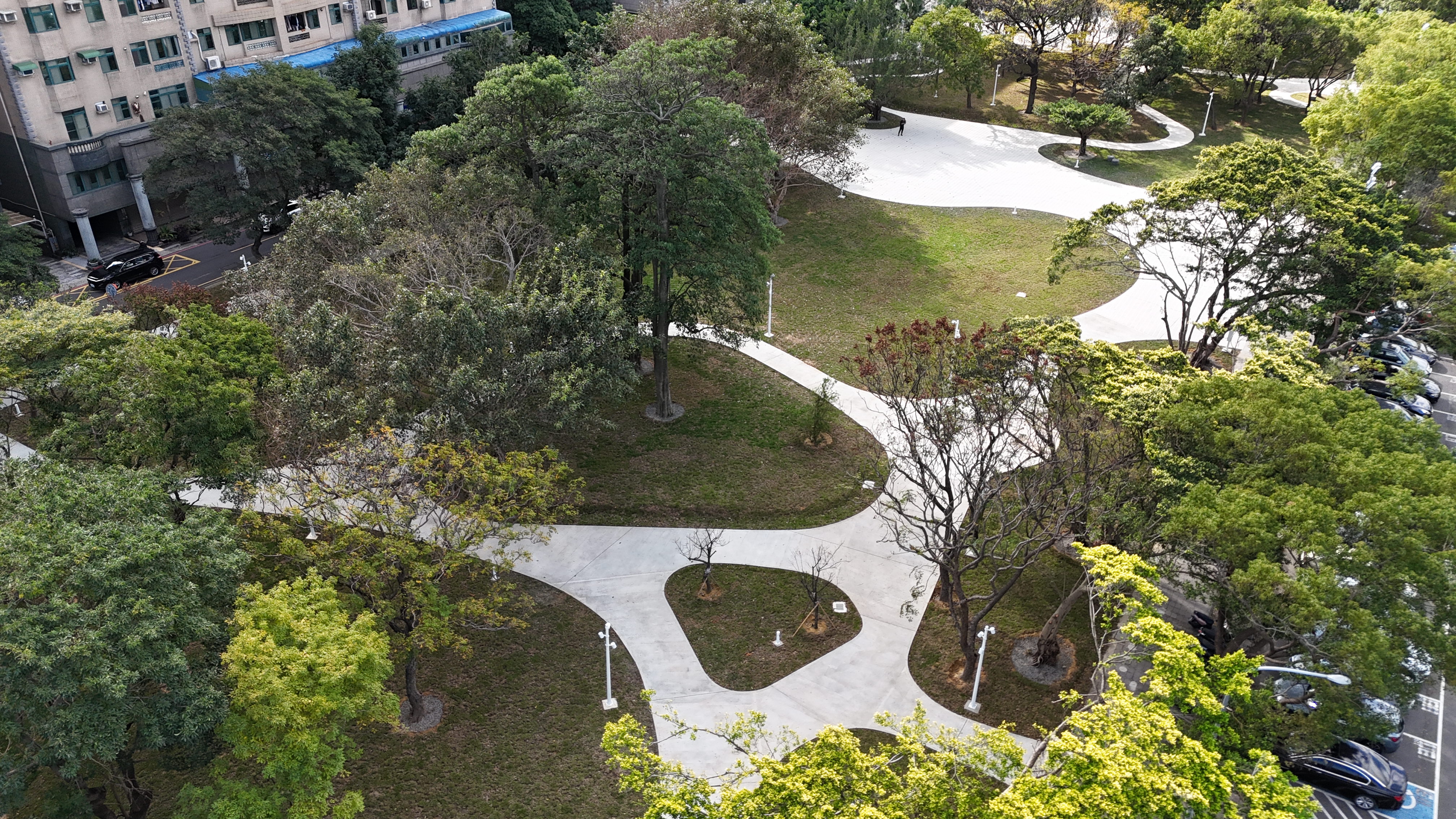
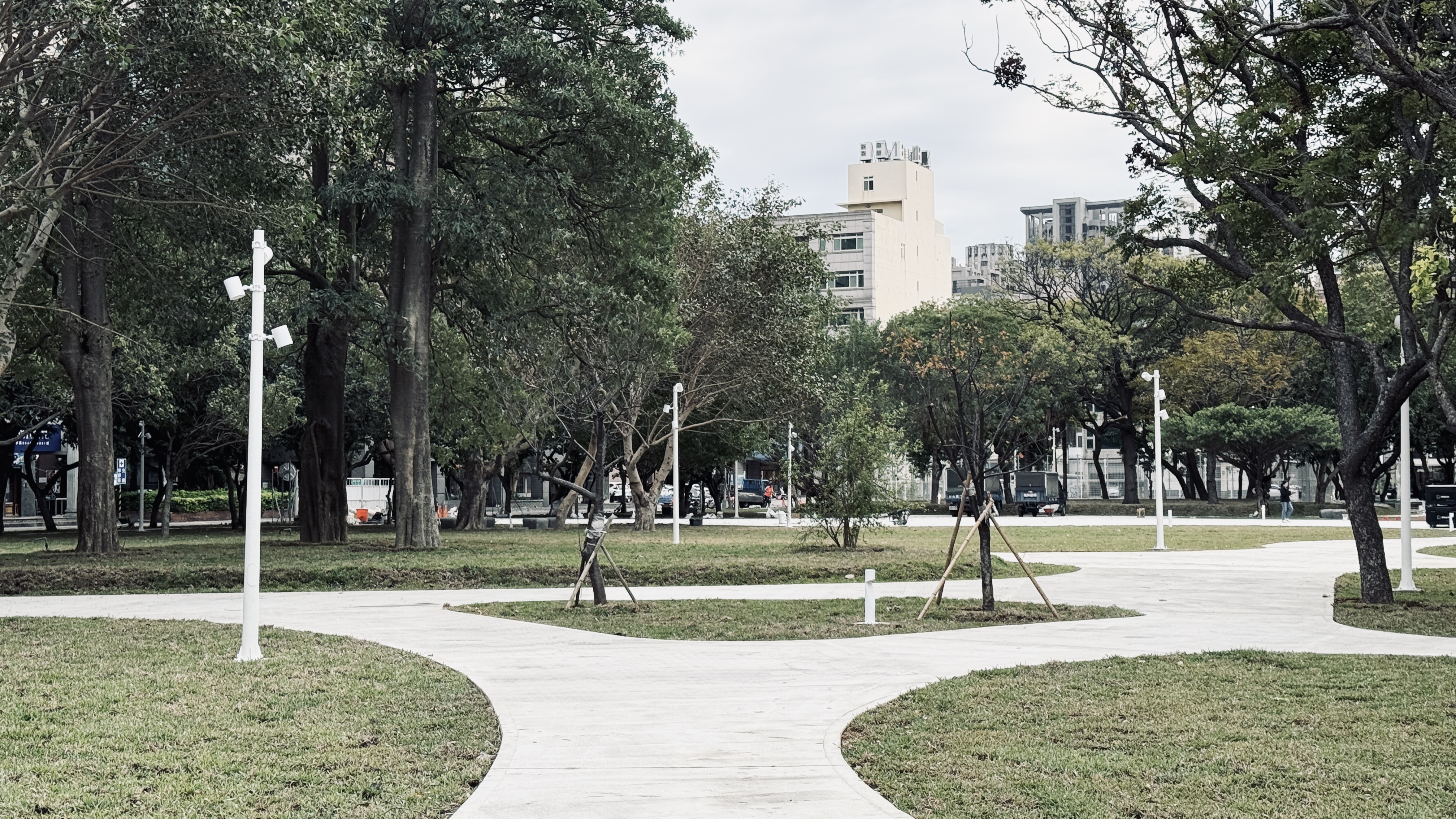
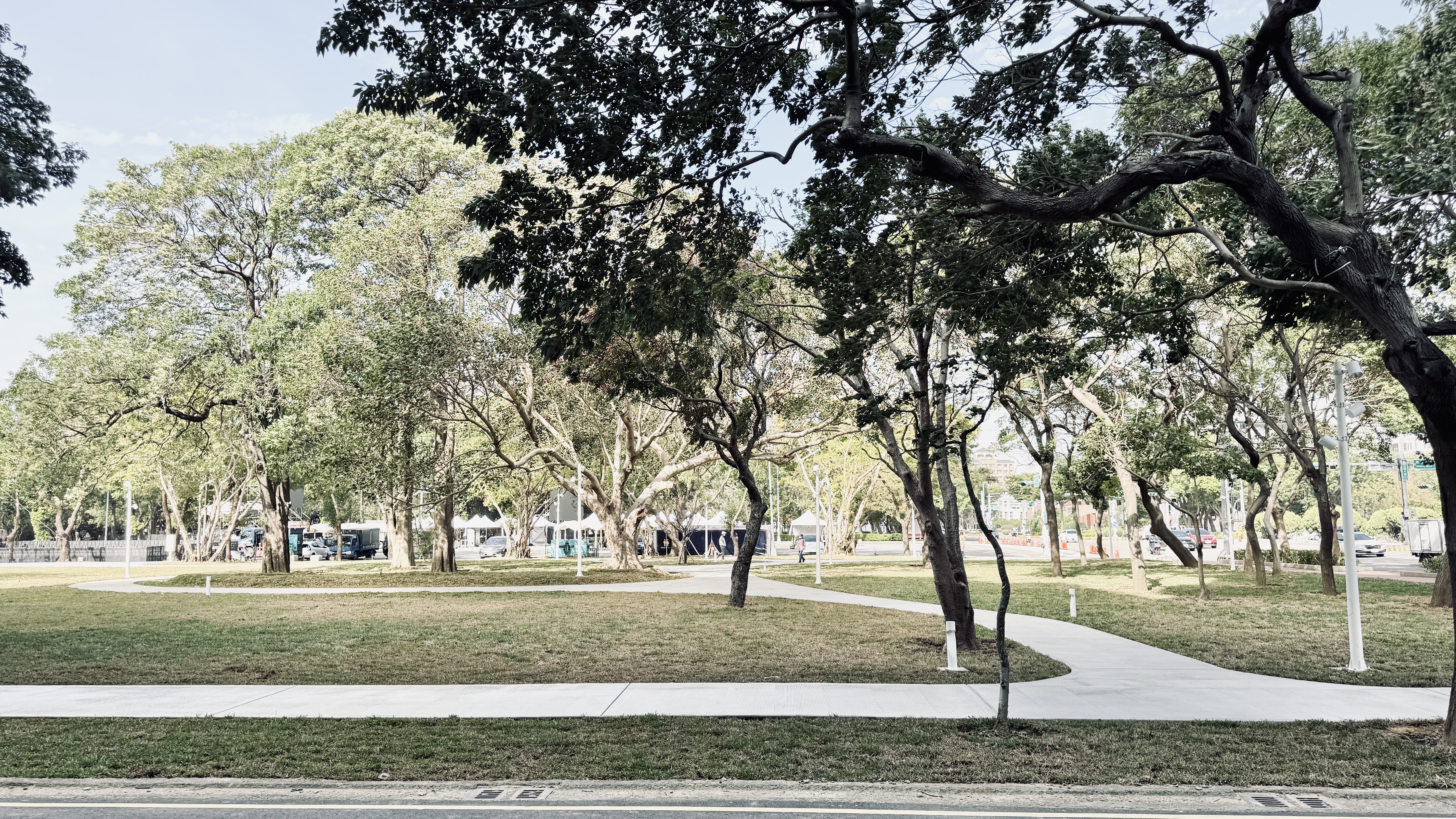
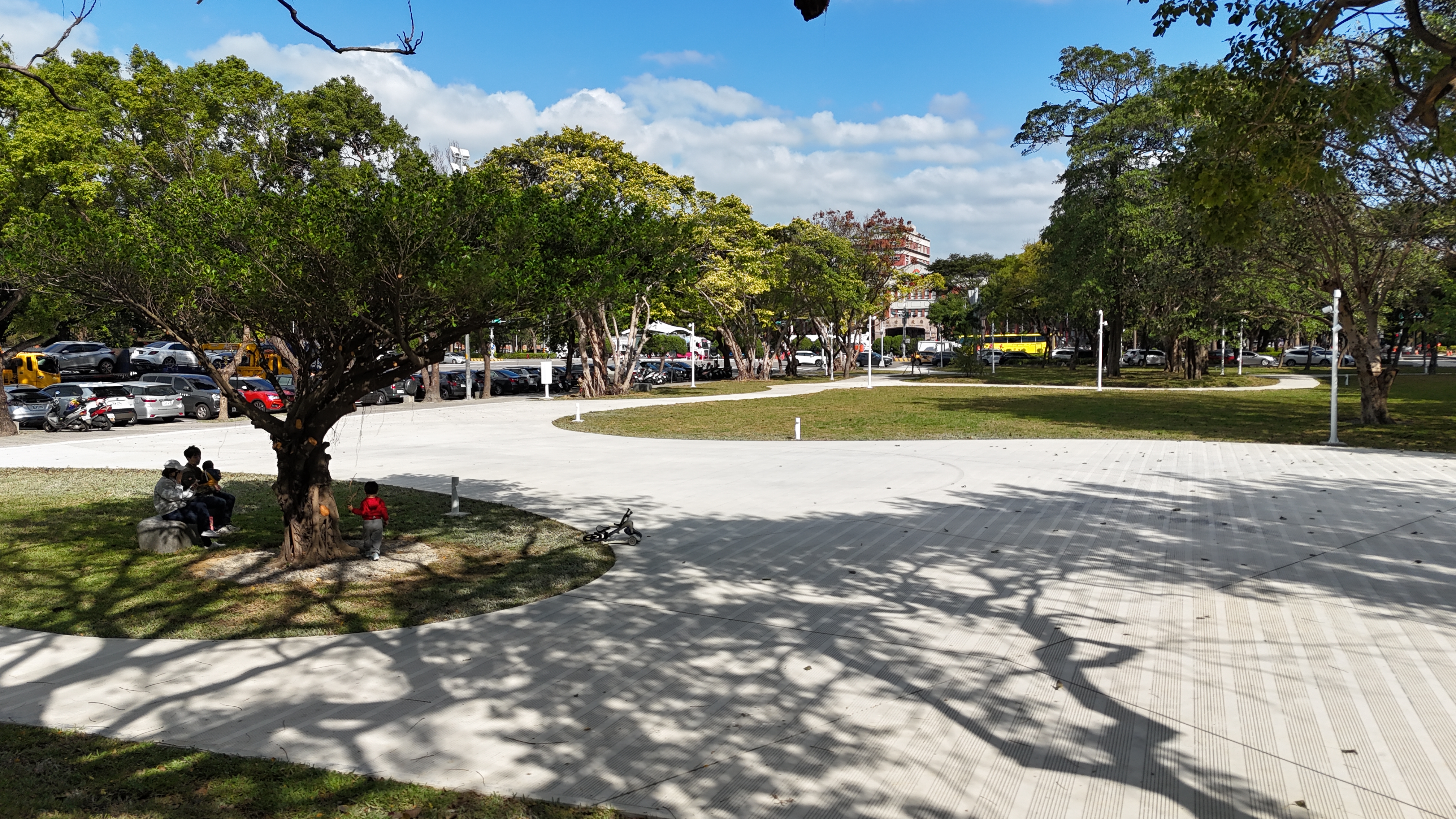
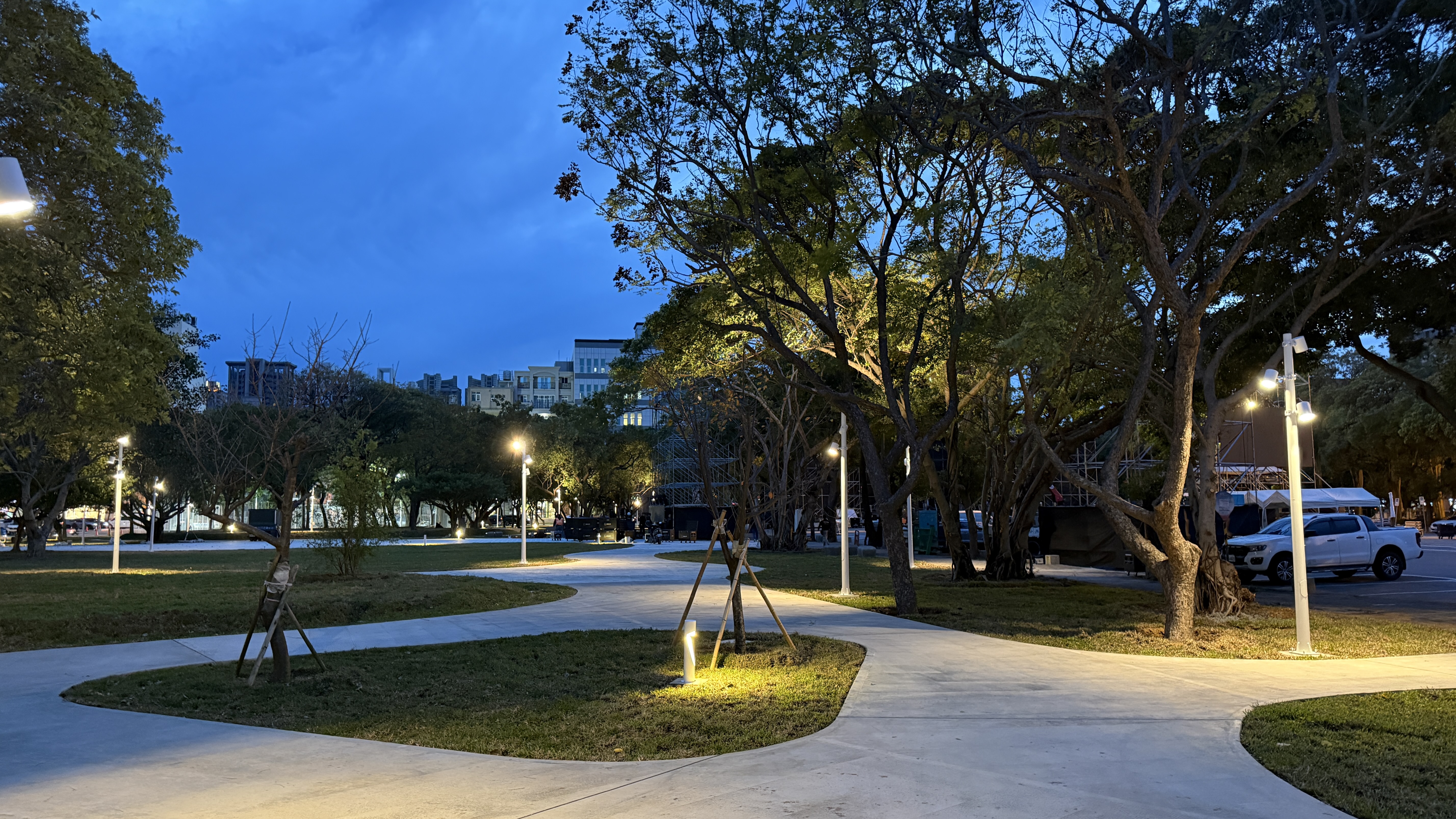
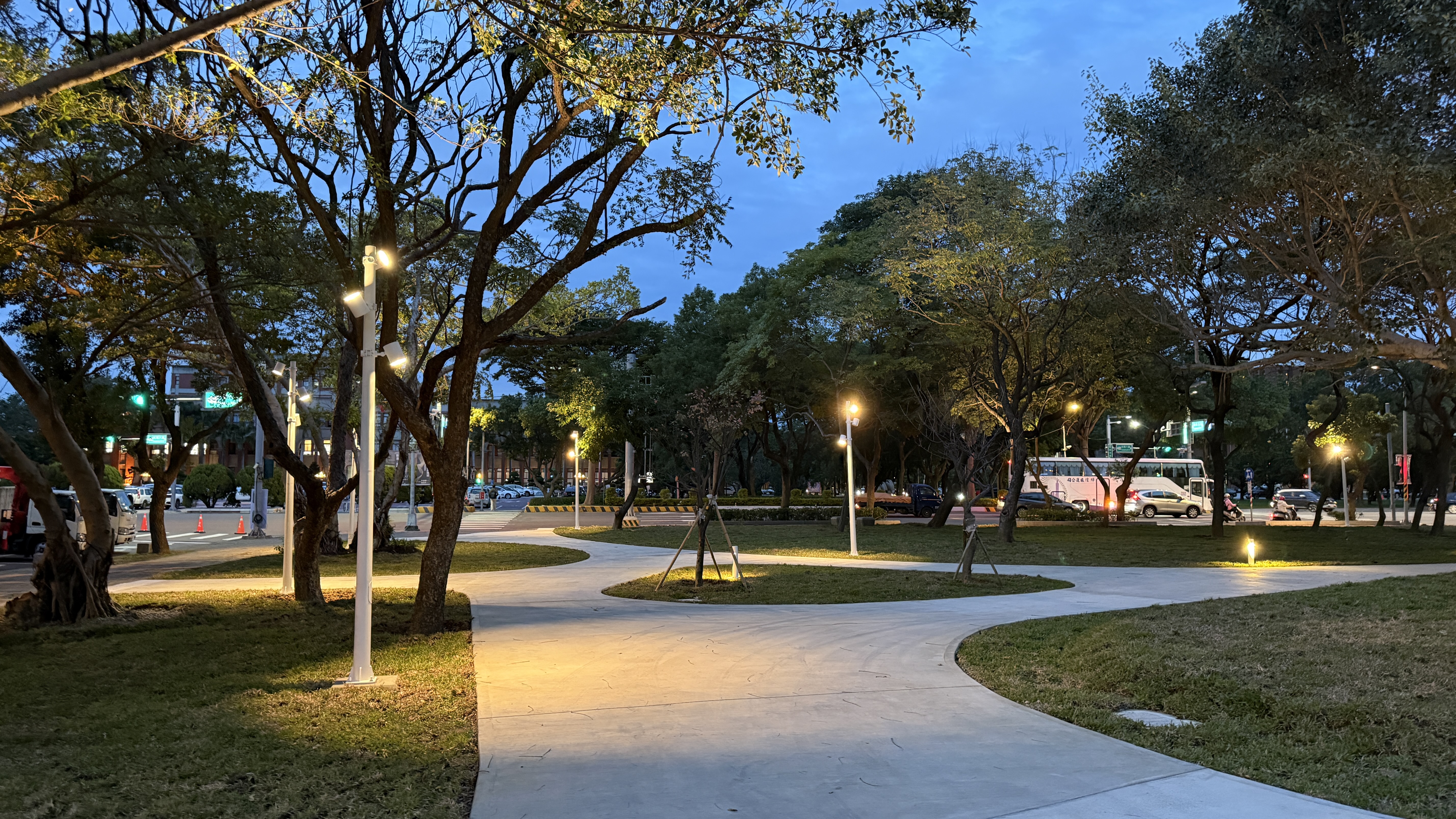
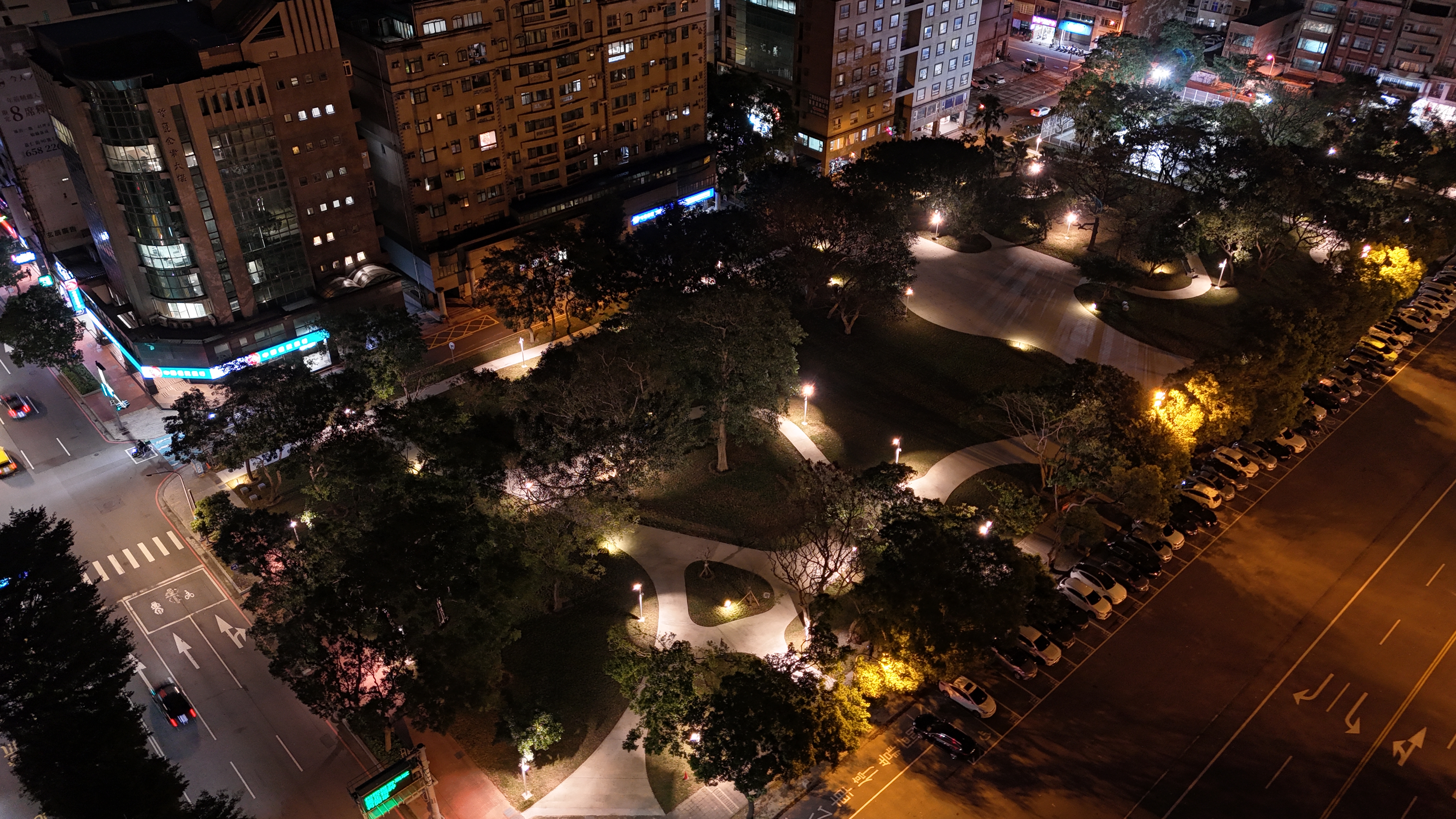
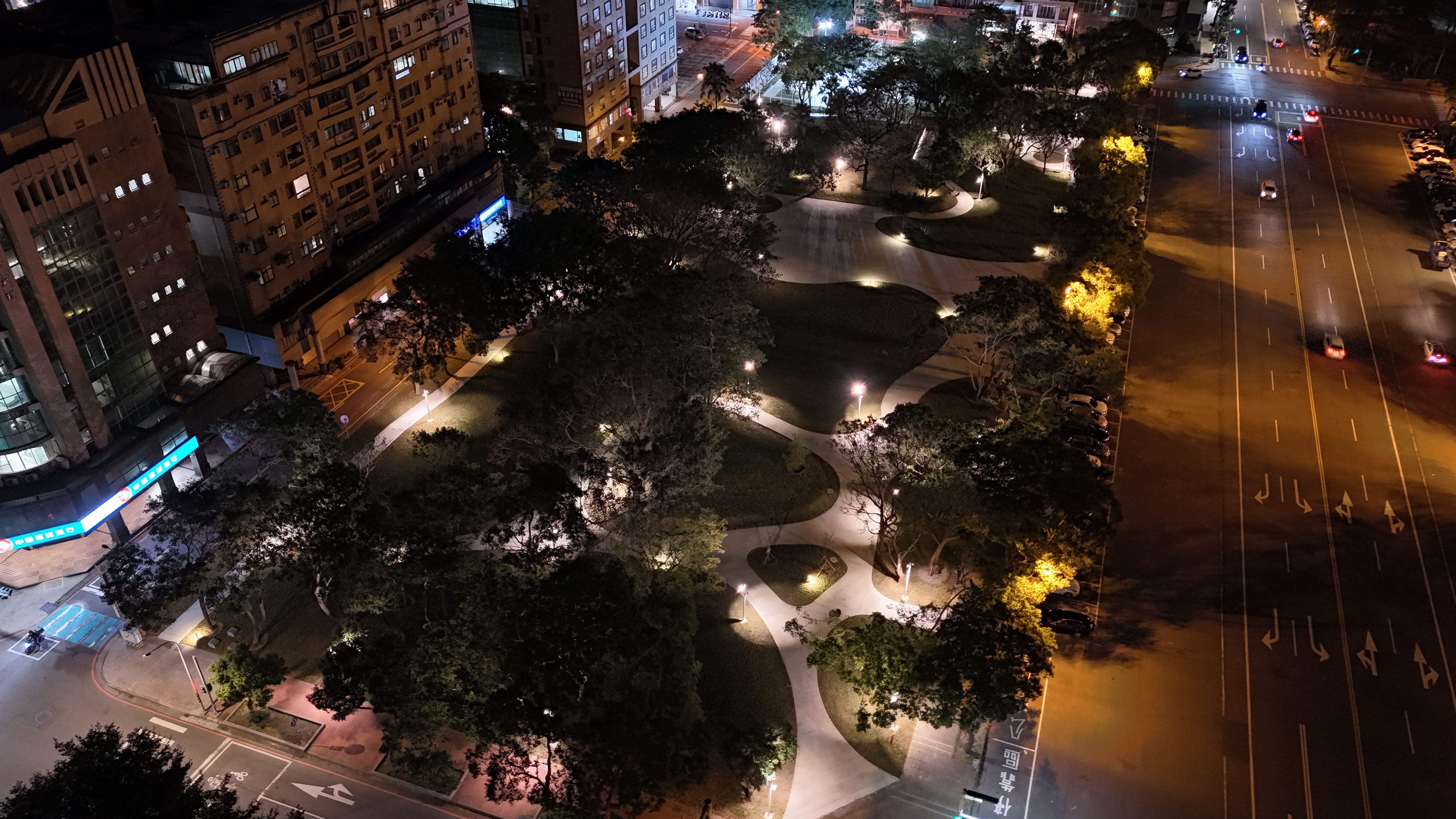
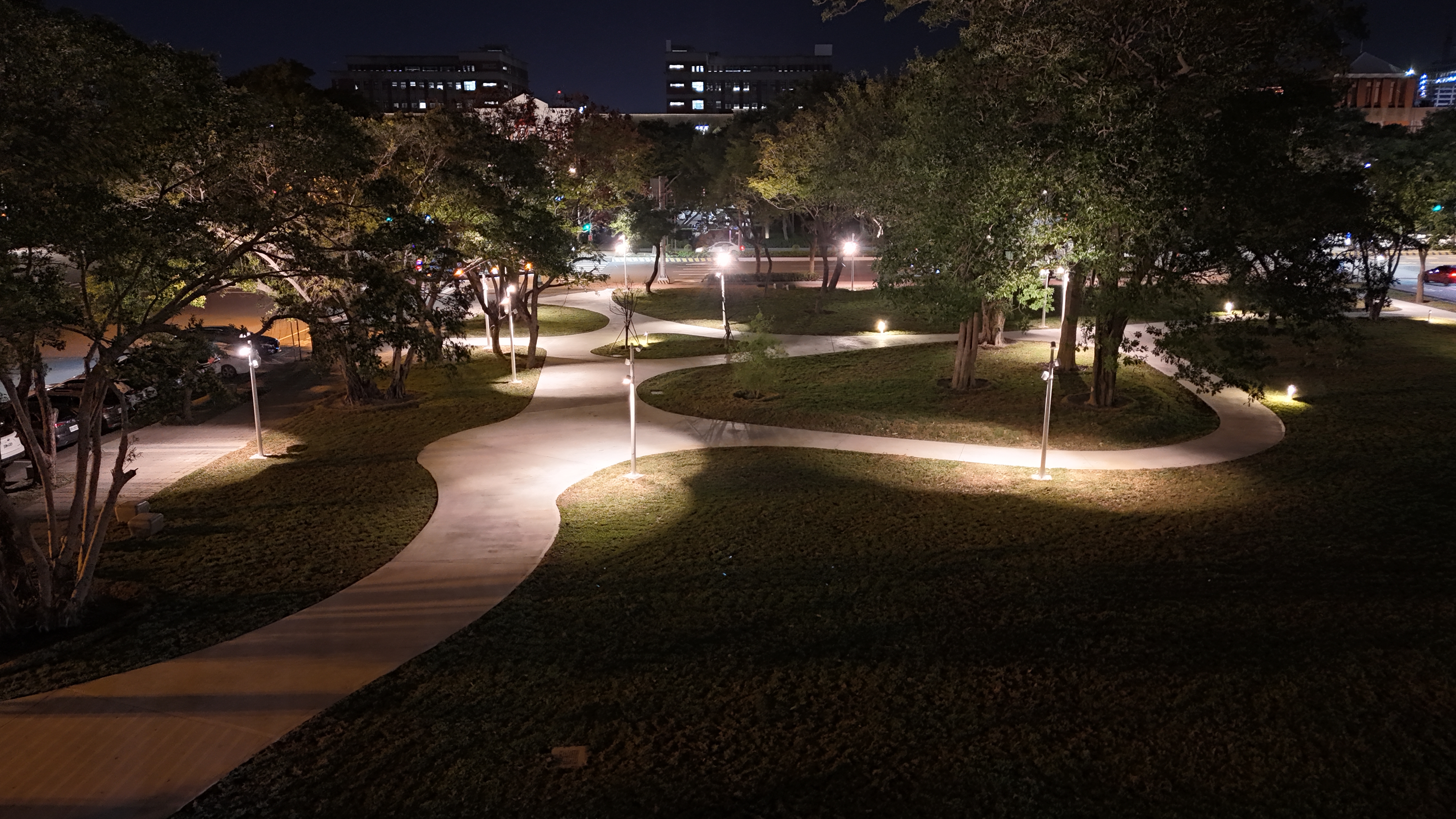
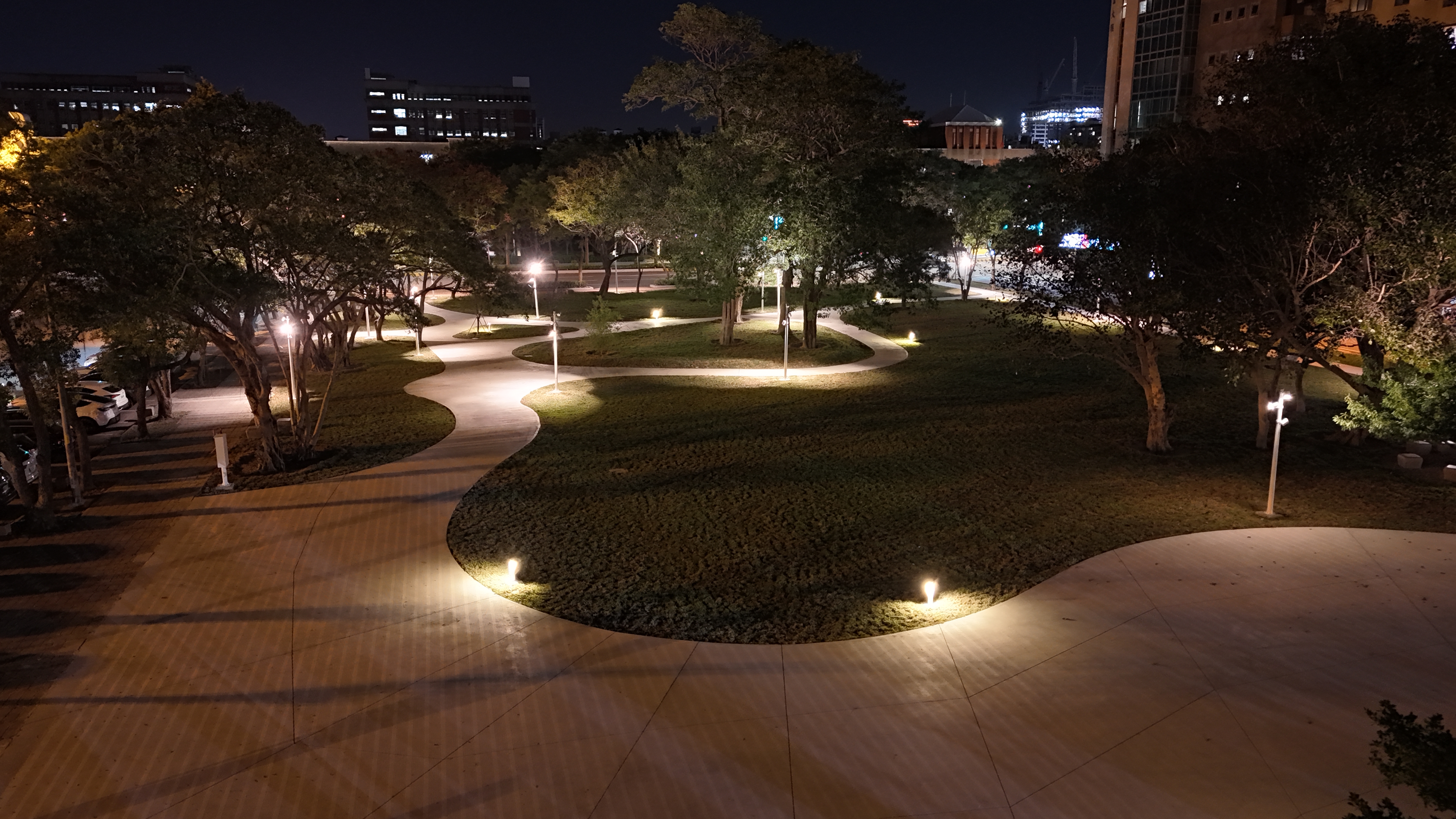
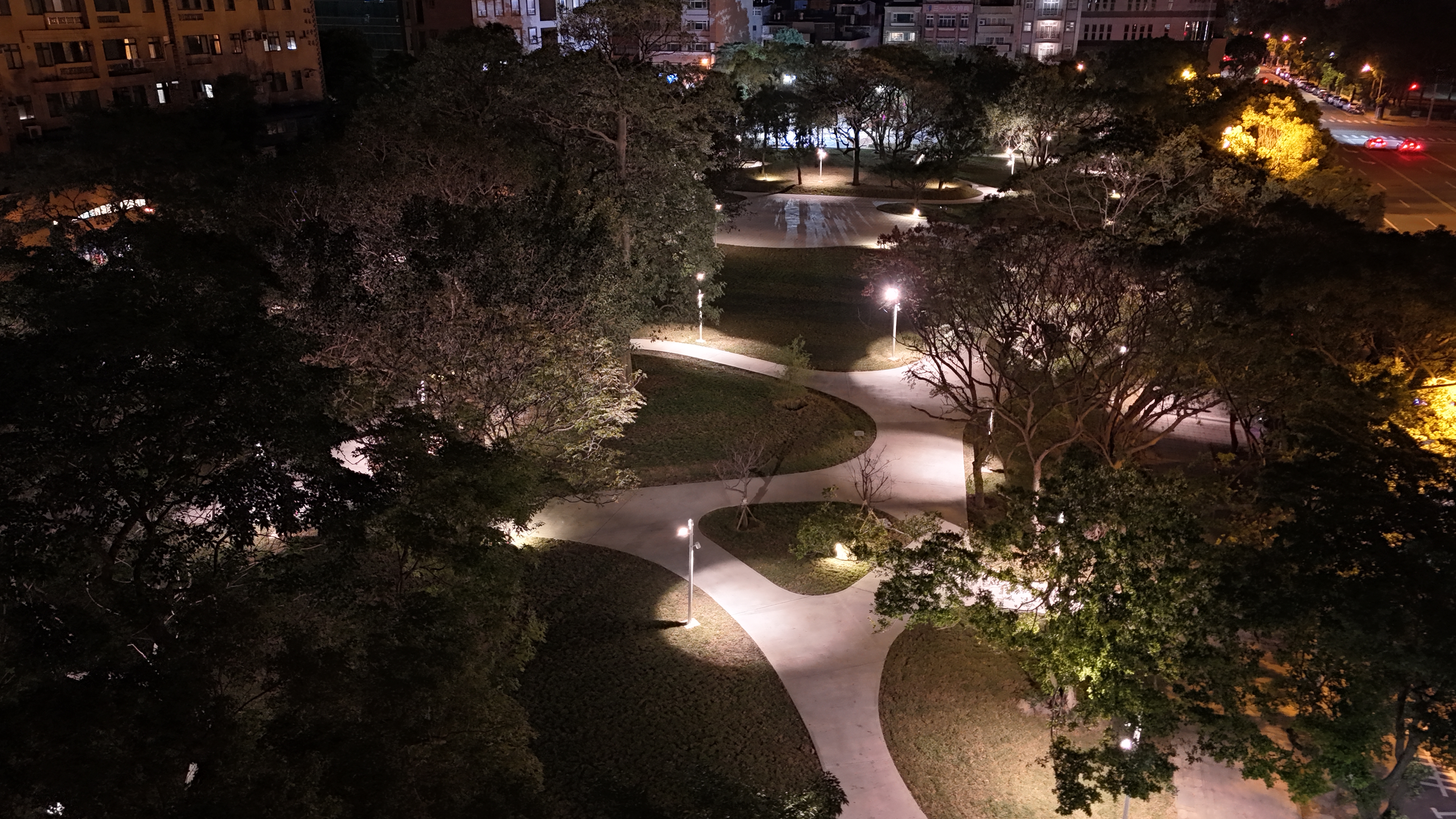
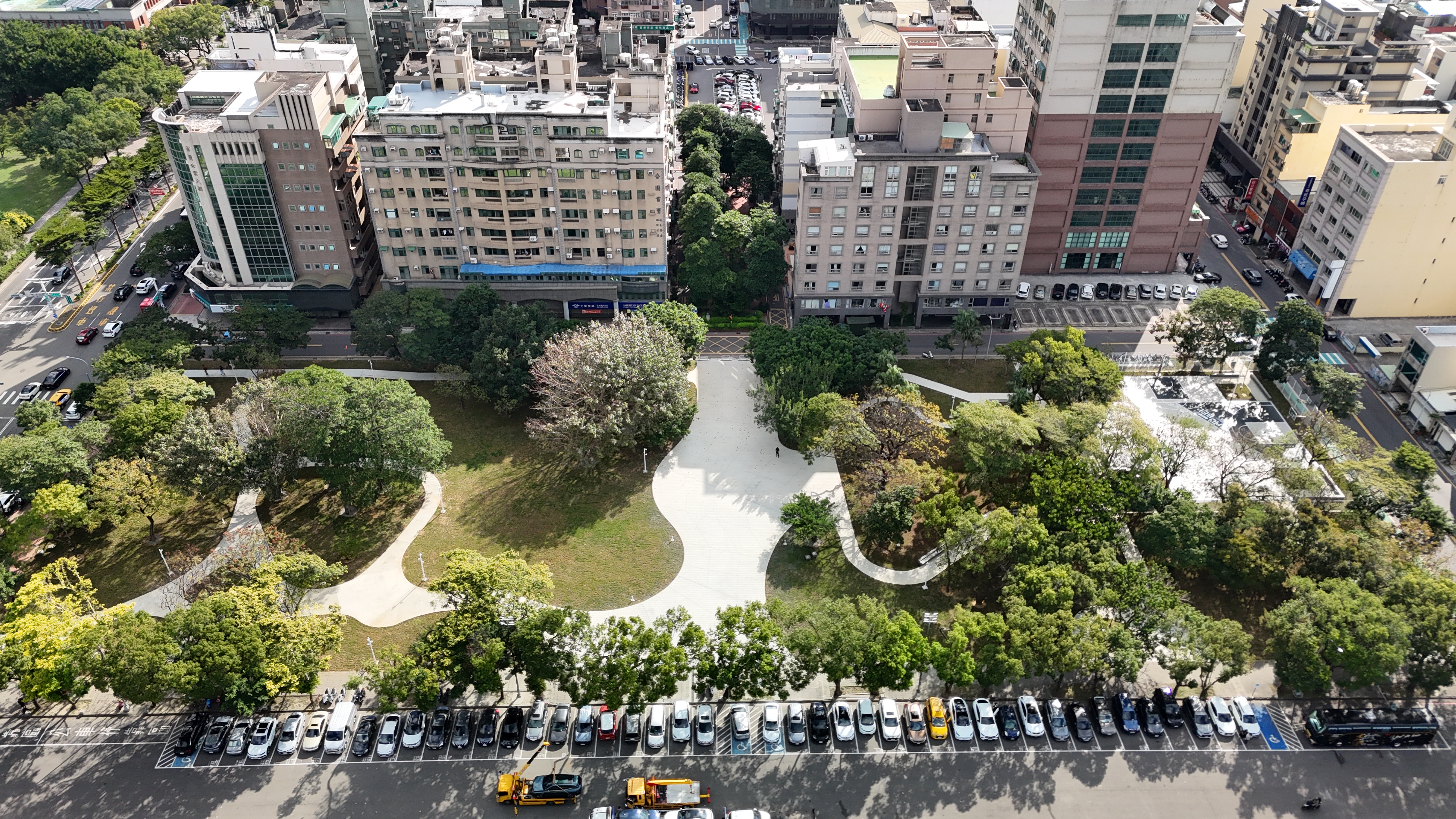
This 36-year-old park, situated south of the Hsinchu County Government and framed by roads on all sides, has long been affected by frequent street closures for major events. Although it occupies a prominent position within the urban fabric, aging vegetation, deteriorated paving, and unclear circulation have led to a gradual decline in usage. The renovation centers on re-awakening the relationship between land and people, reorganizing the landscape, light, and pedestrian flow to restore the park as a welcoming urban oasis.
1. Rebalancing the Tree Structure and Sunlight
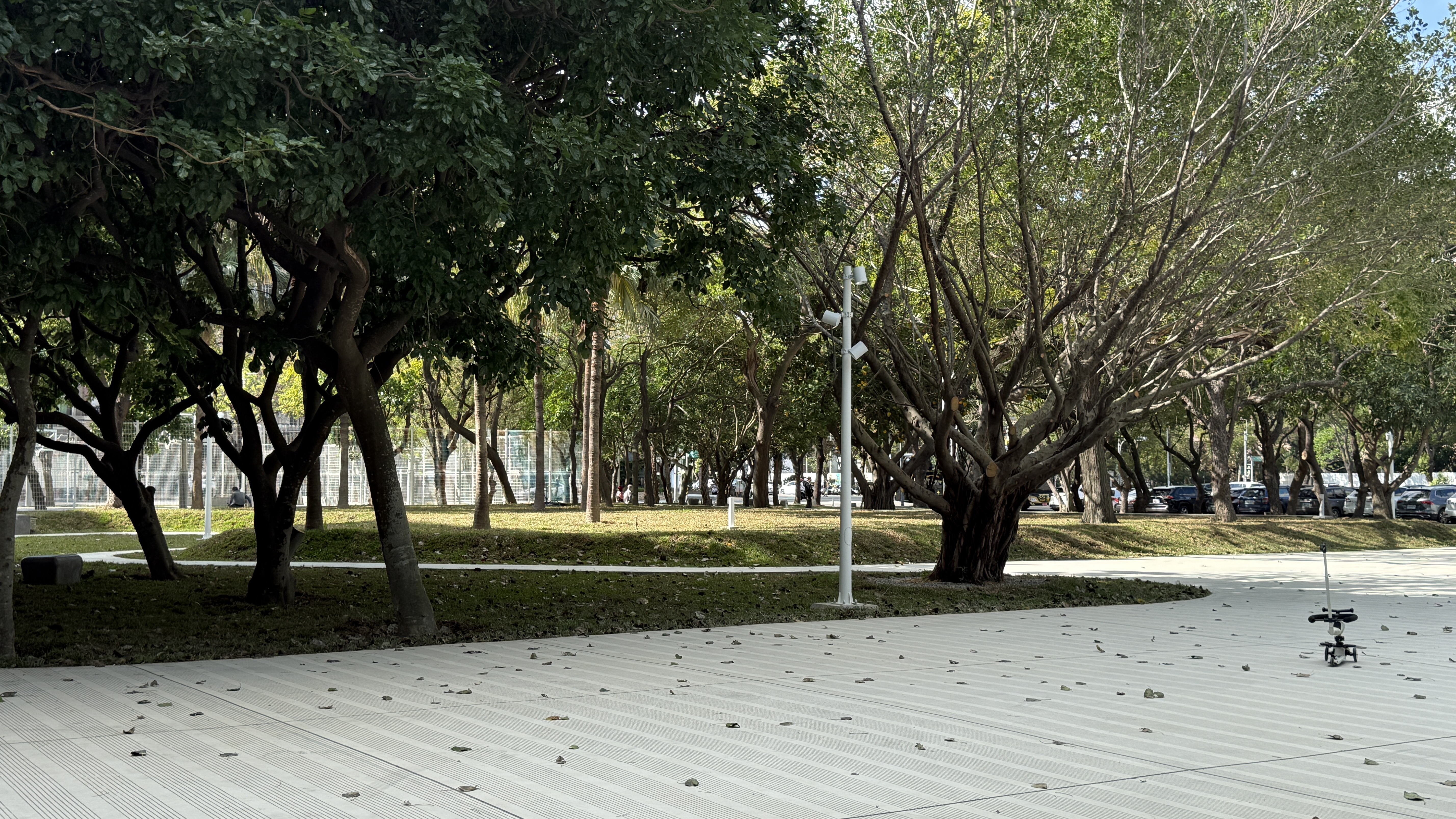
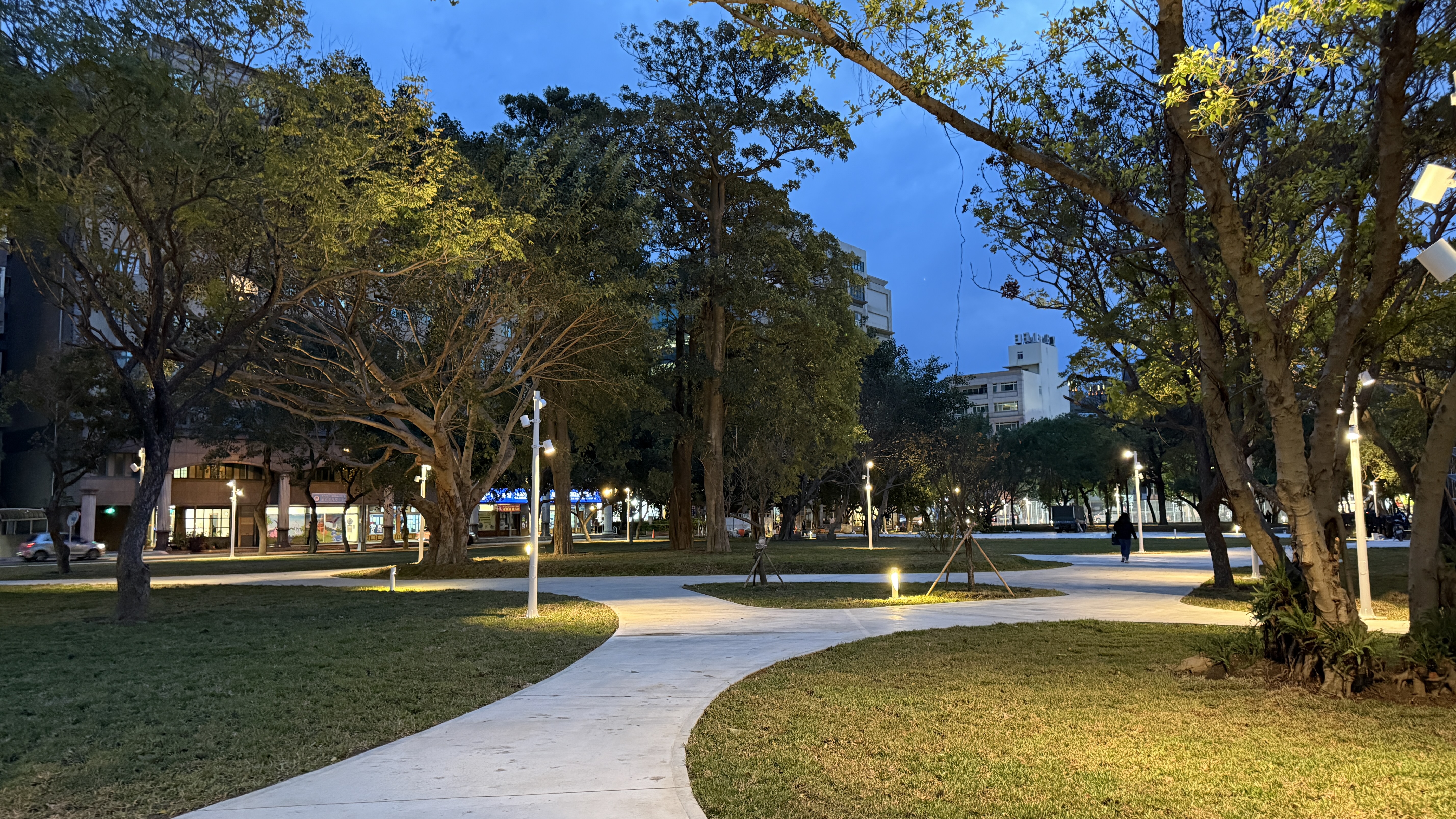
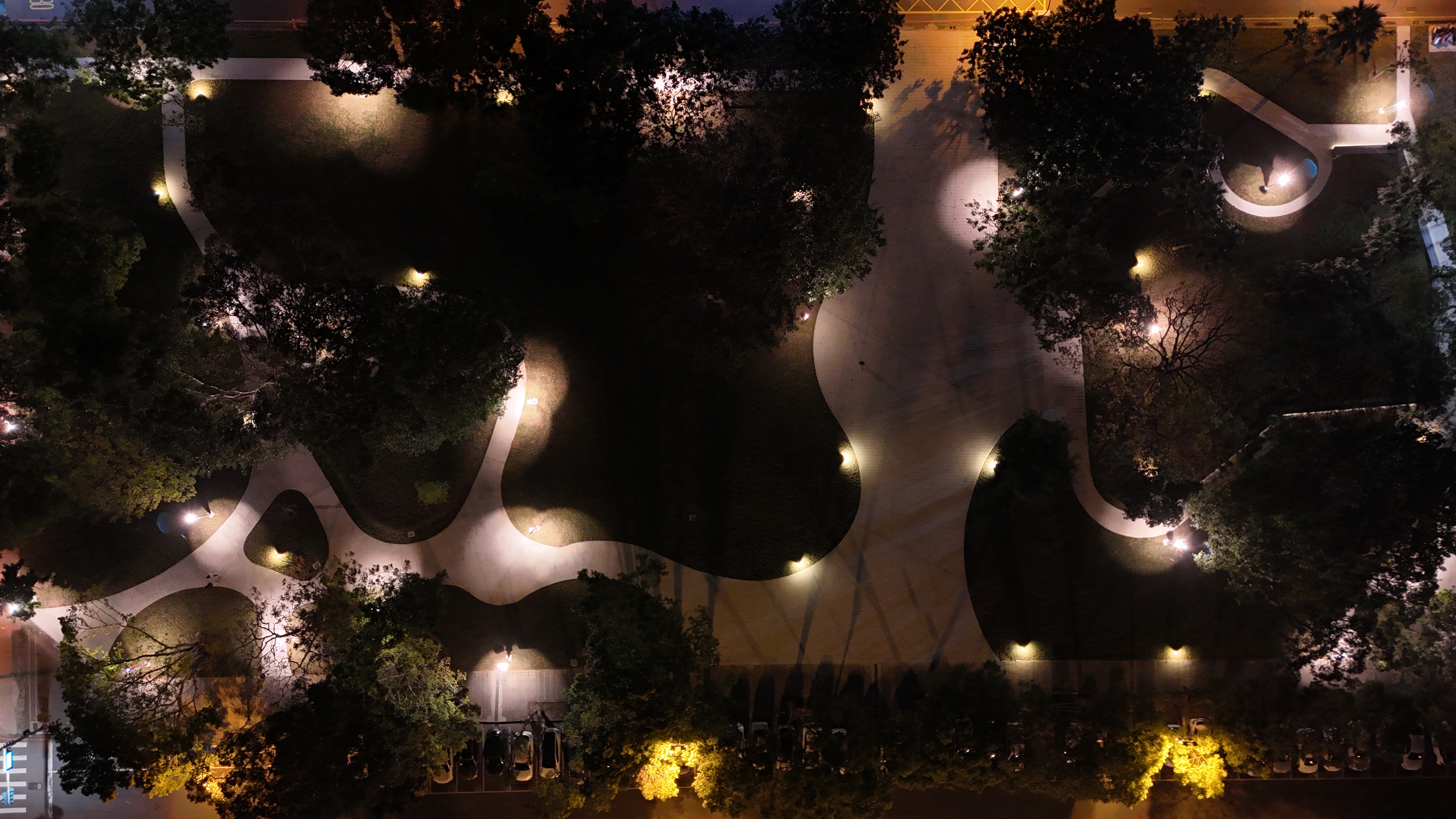
All existing trees were thoroughly assessed. We removed individuals that were weak, diseased, or planted too densely, allowing the soil and roots to breathe again. The preserved mature trees form the spatial framework, enabling sunlight to filter through the canopy, supporting healthier understory planting and redefining the relationship between lawn areas and surrounding spaces.
2. Micro-topography for Human Comfort
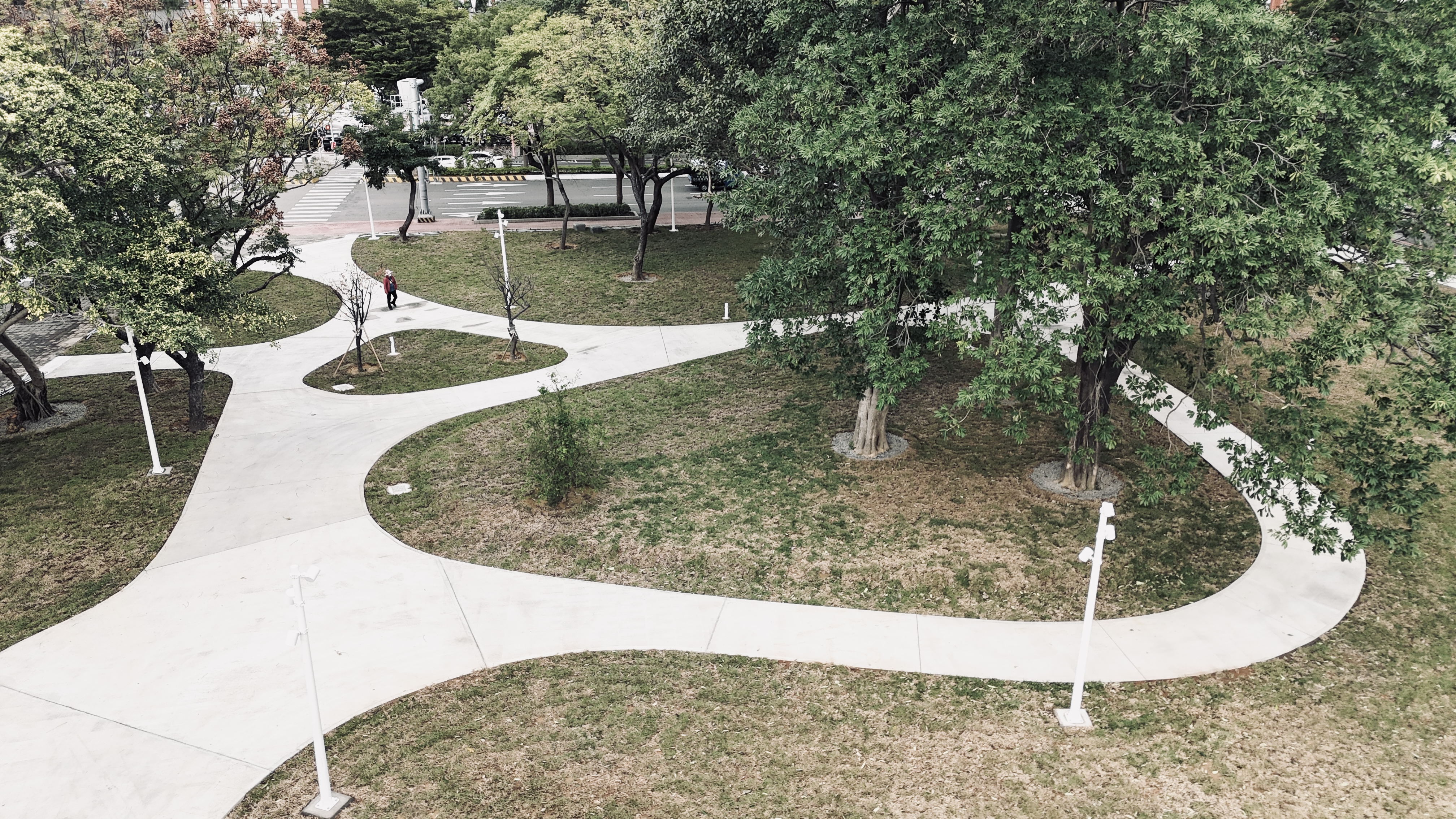
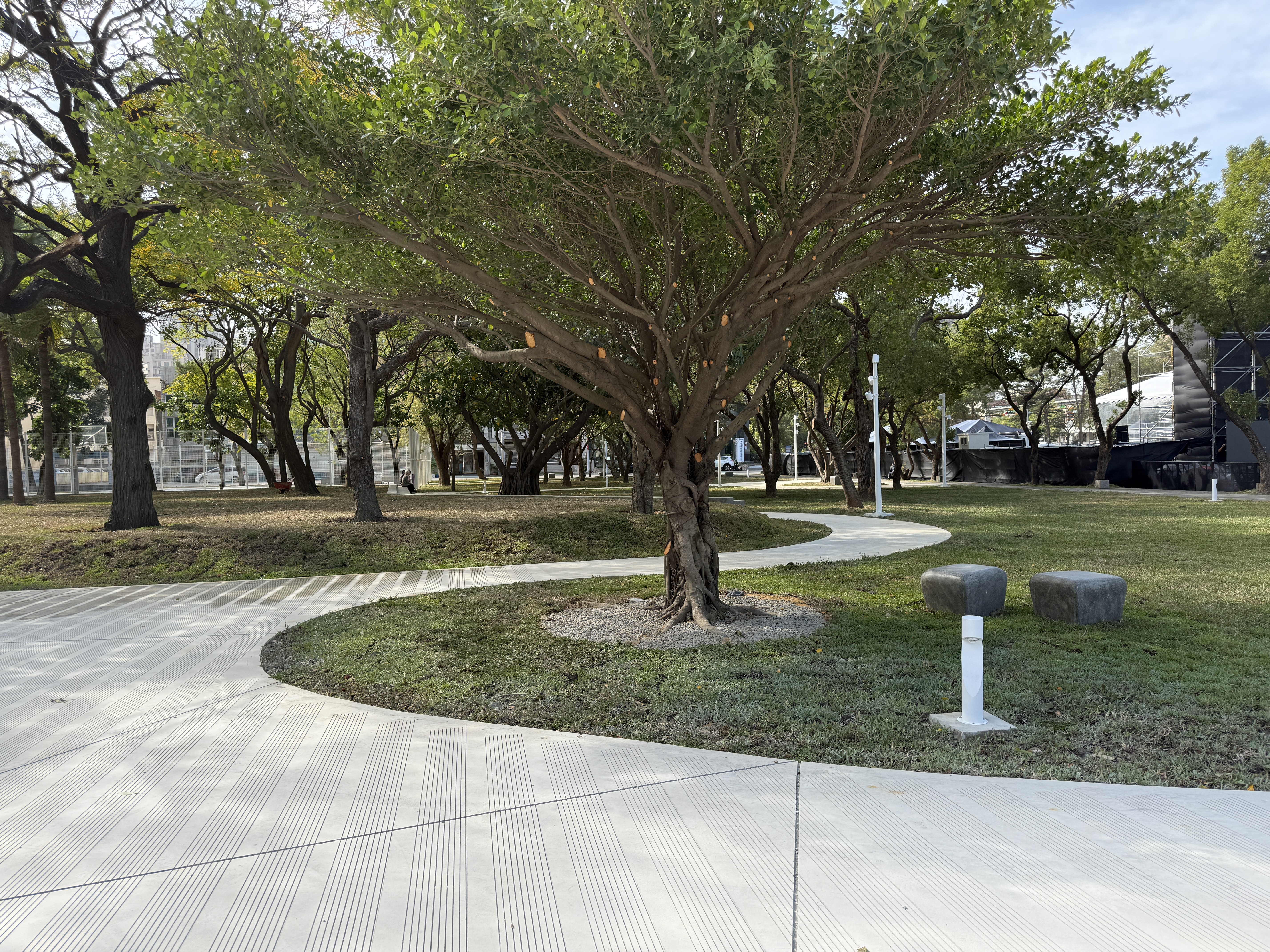
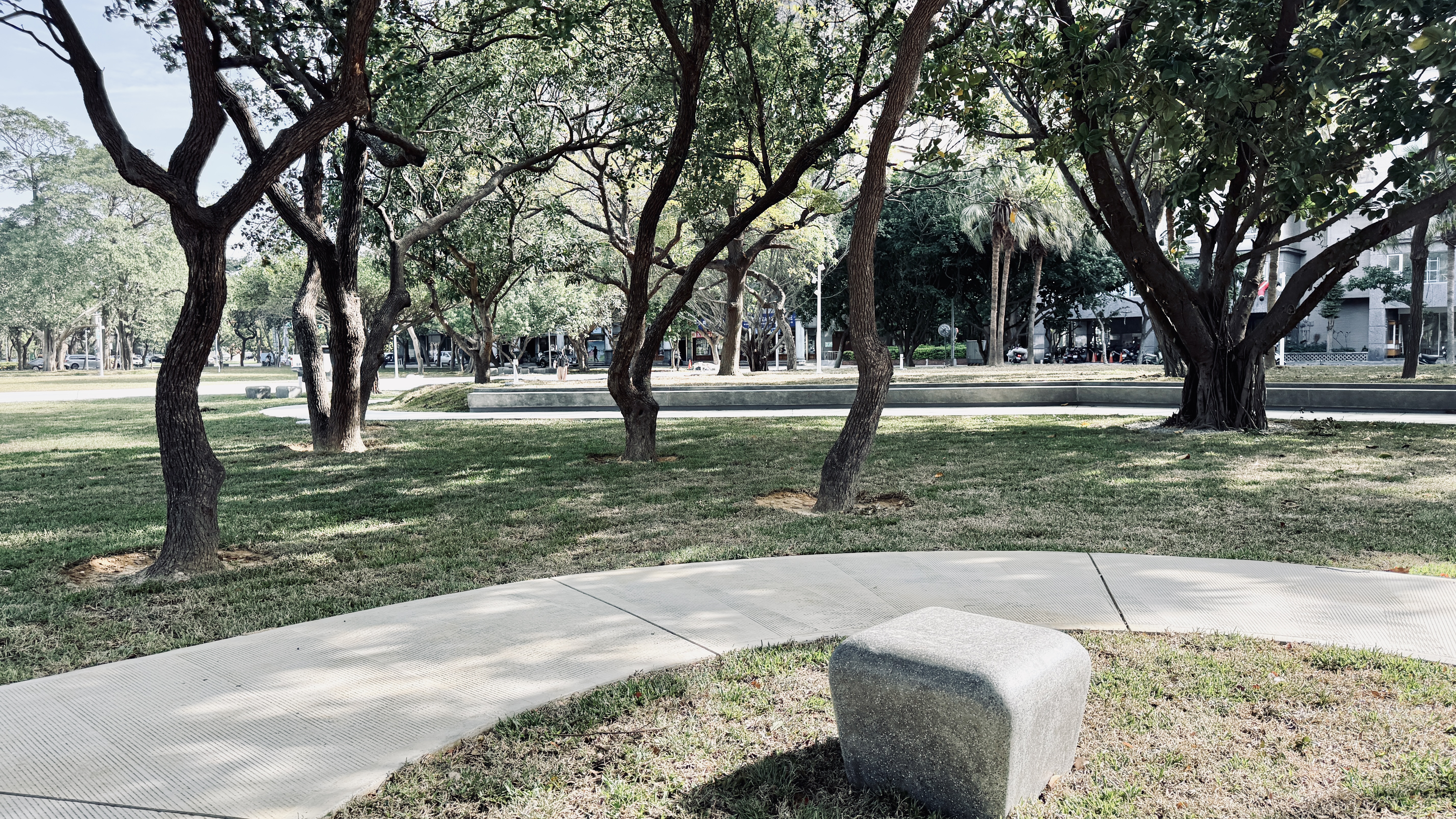
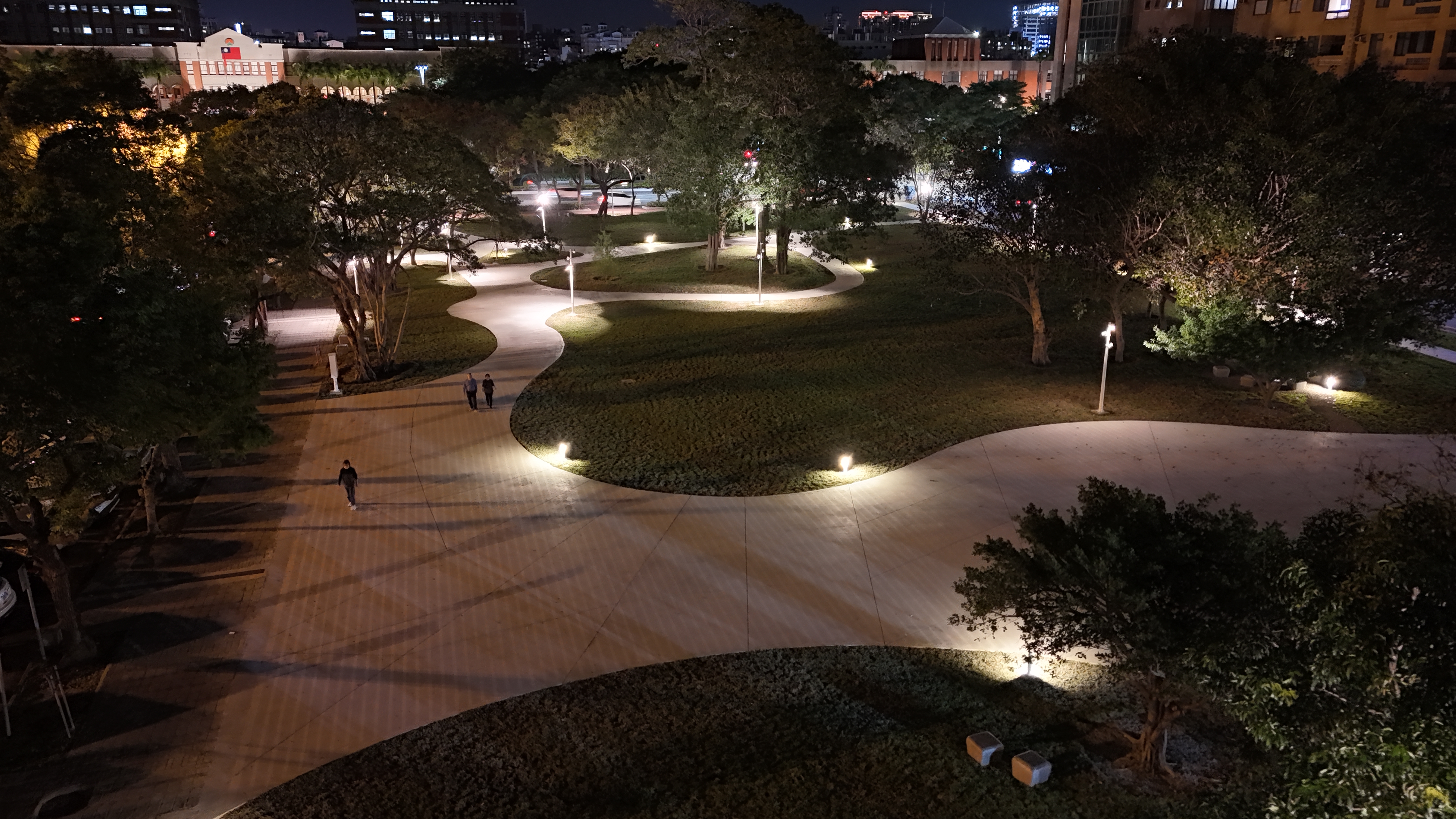
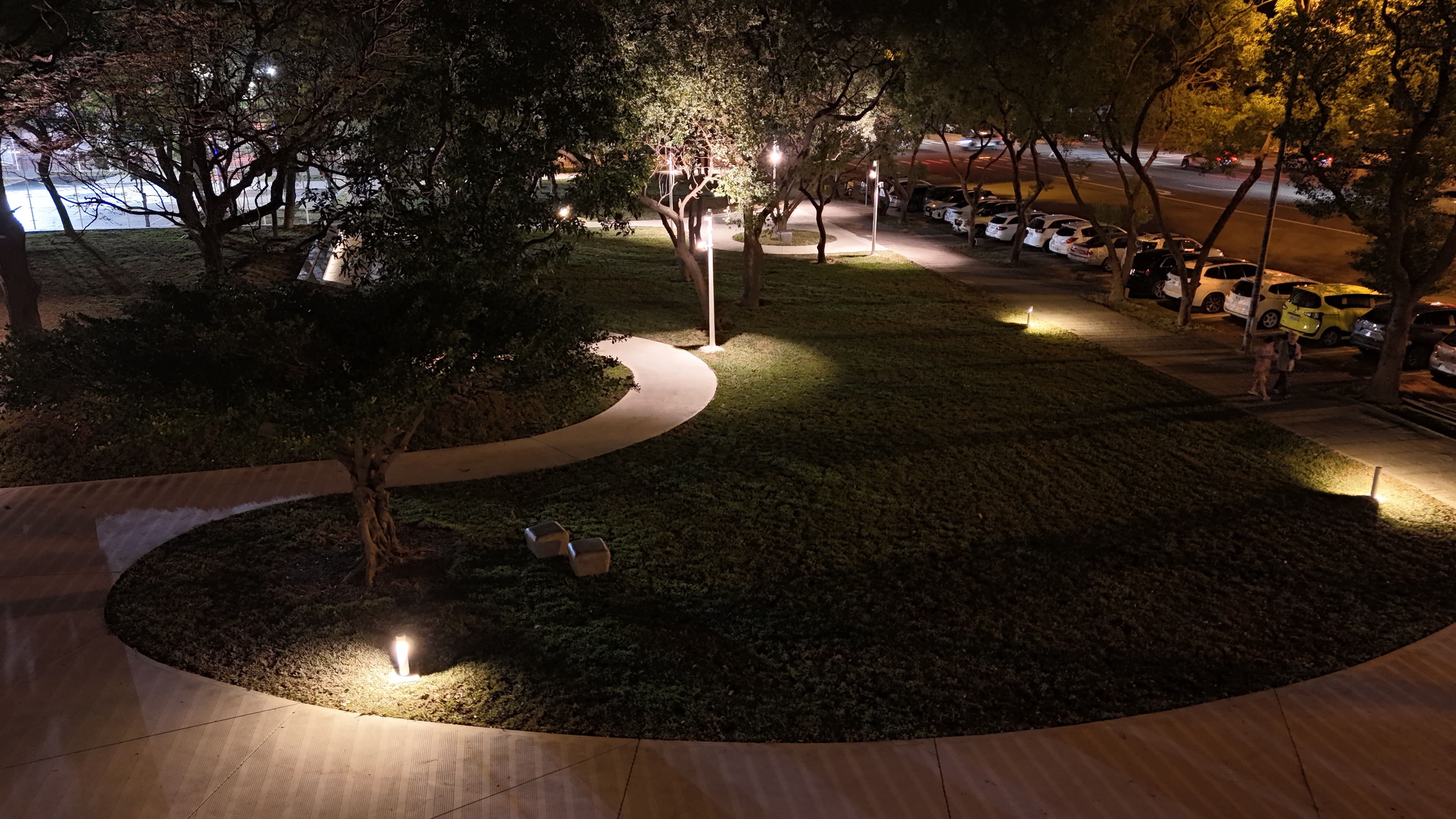
Through subtle grading adjustments, two gentle green mounds approximately 50 cm high were introduced, creating soft and natural undulations. Their outer edges transition through mild slopes, with selected areas supported by terrazzo low walls that also serve as seating. These varied edges provide multiple postures and viewpoints for users to rest and enjoy the breeze.
3. A Naturally Flowing Pedestrian Network
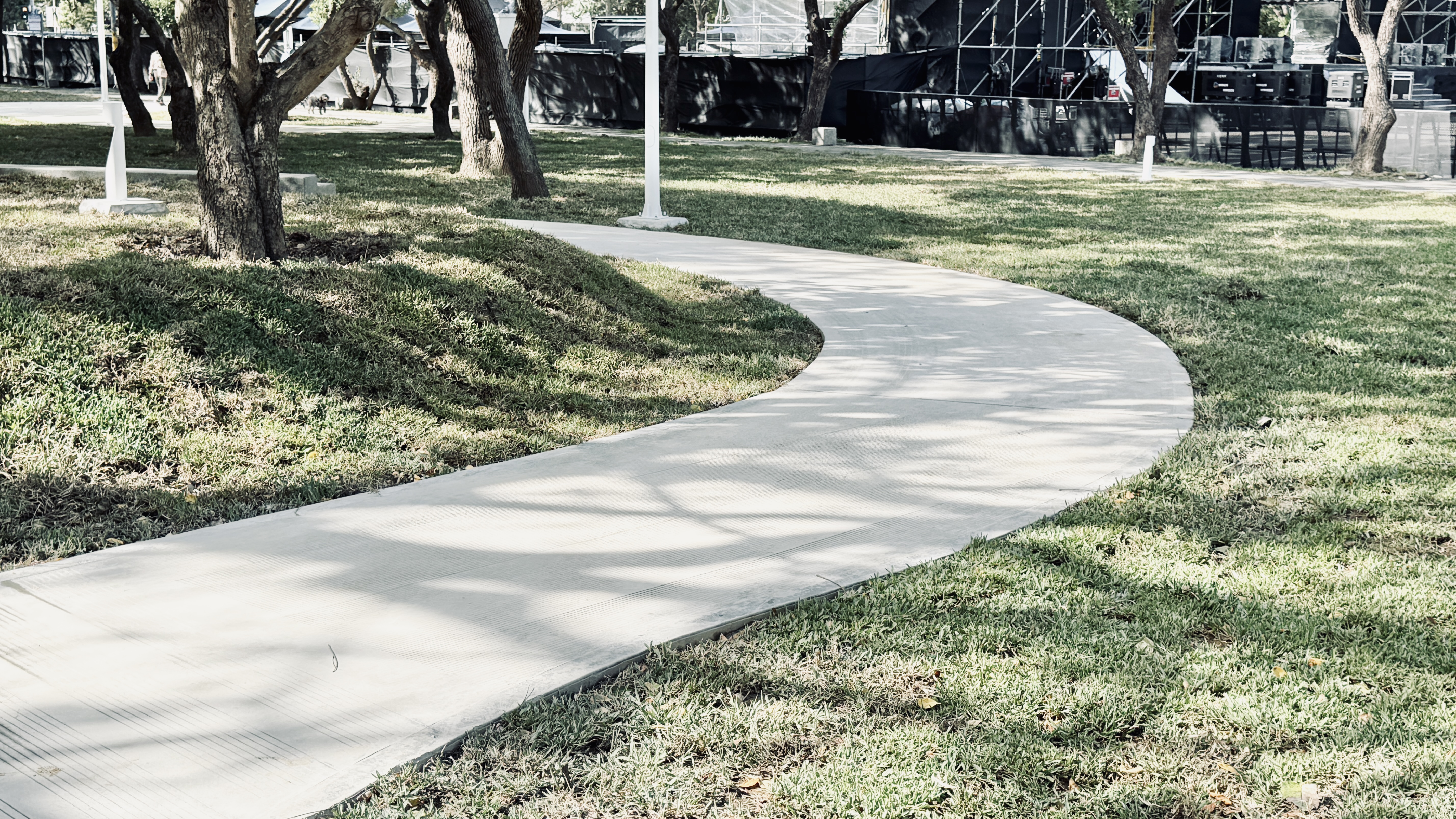
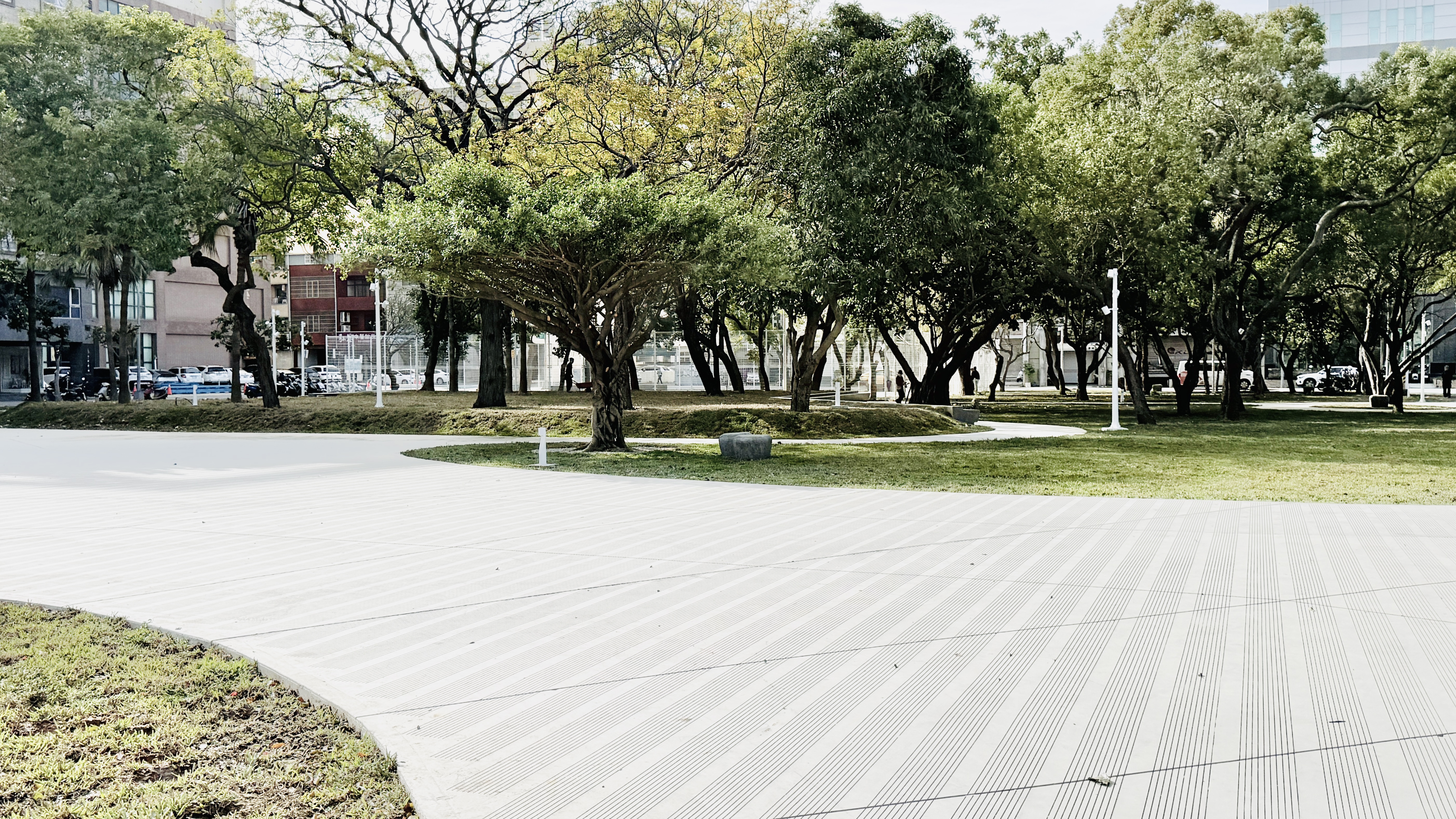
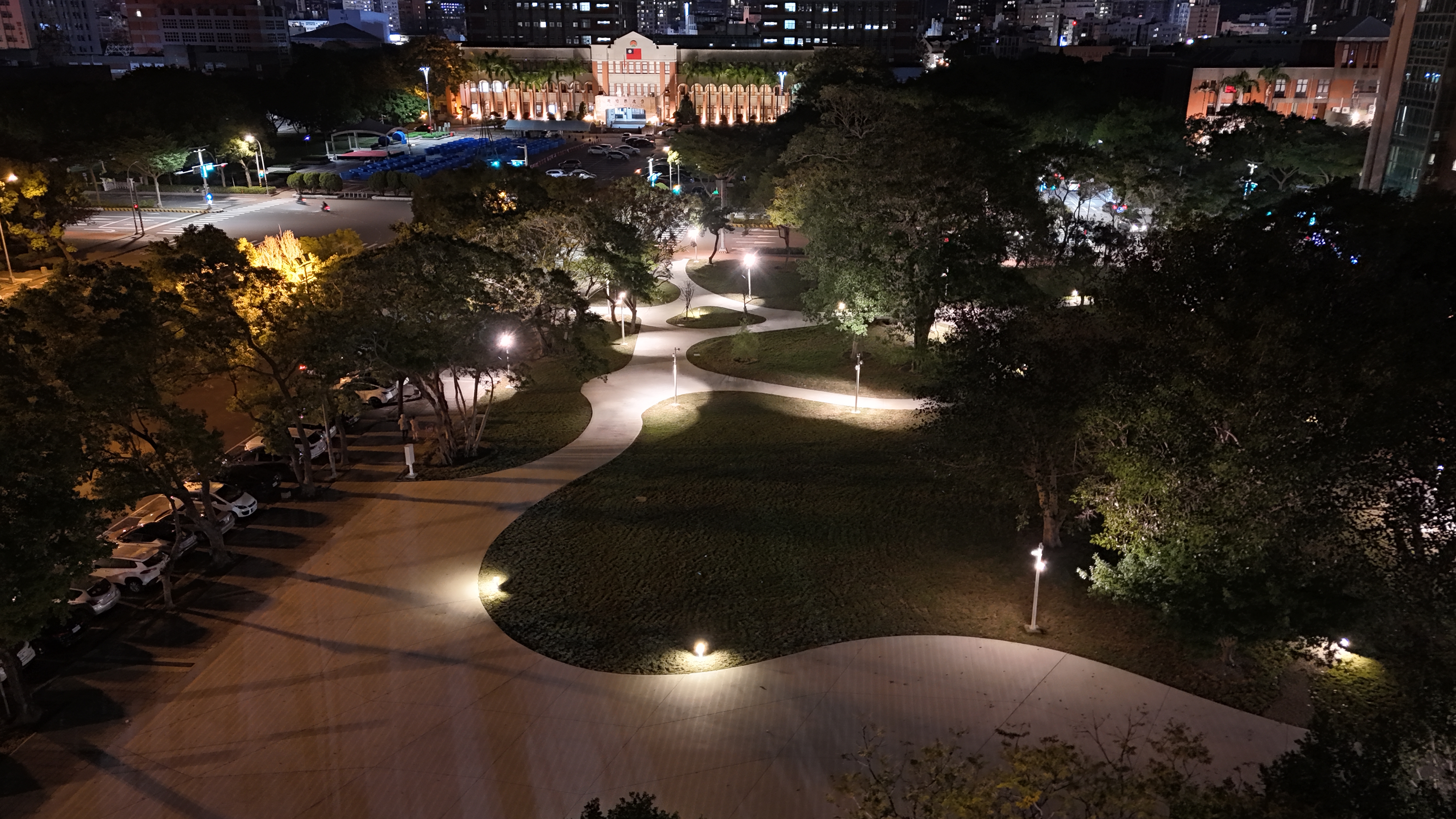
A 2 m primary pathway and 1 m winding trail were laid out in a fluid, terrain-responsive manner, linking street-corner nodes, plaza entrances, and key activity areas. Along different segments, the circulation expands into meeting points and open plazas, giving the park a comfortable rhythm between movement and pause.
4. Craft, Texture, and Material Articulation
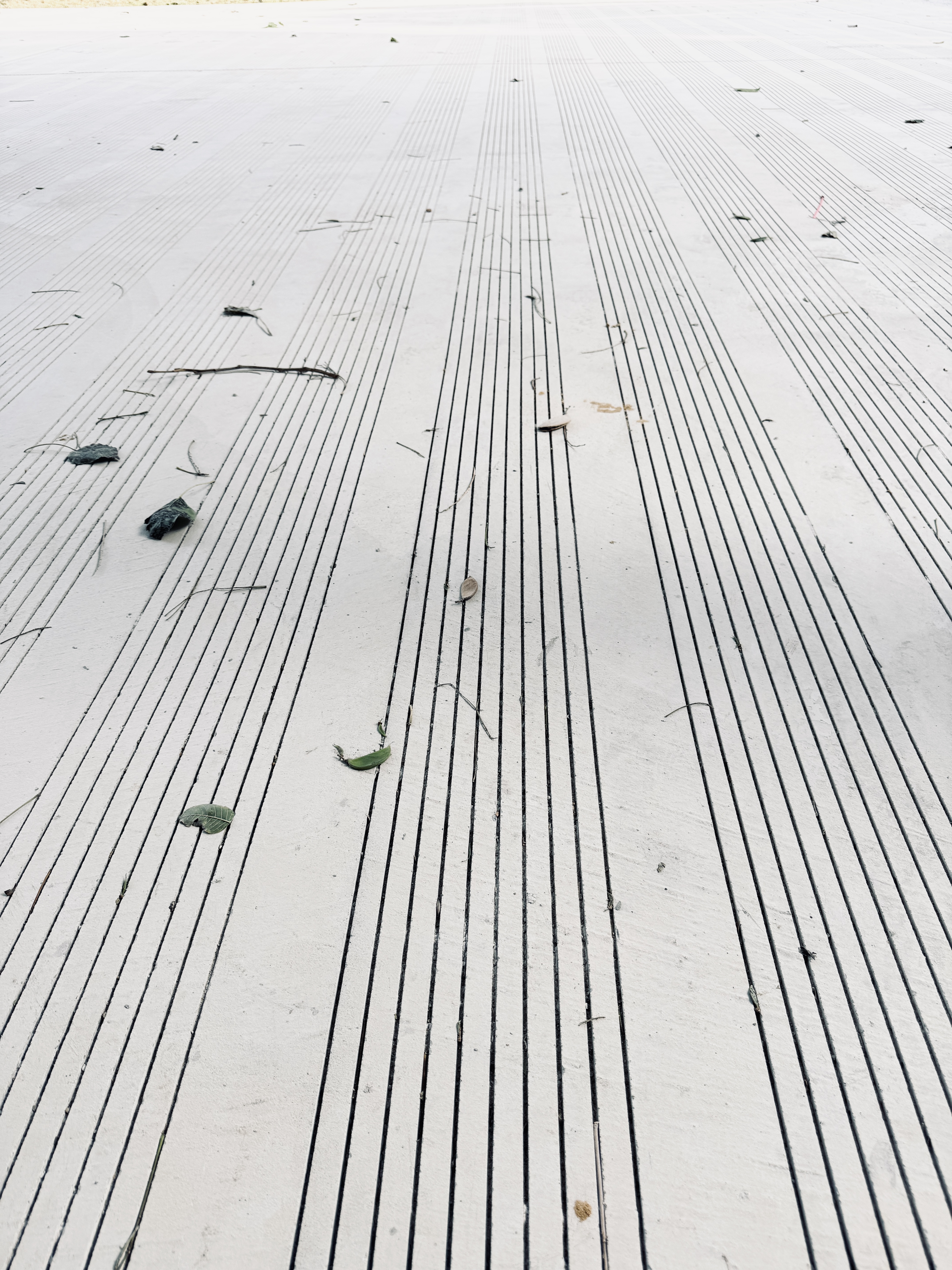
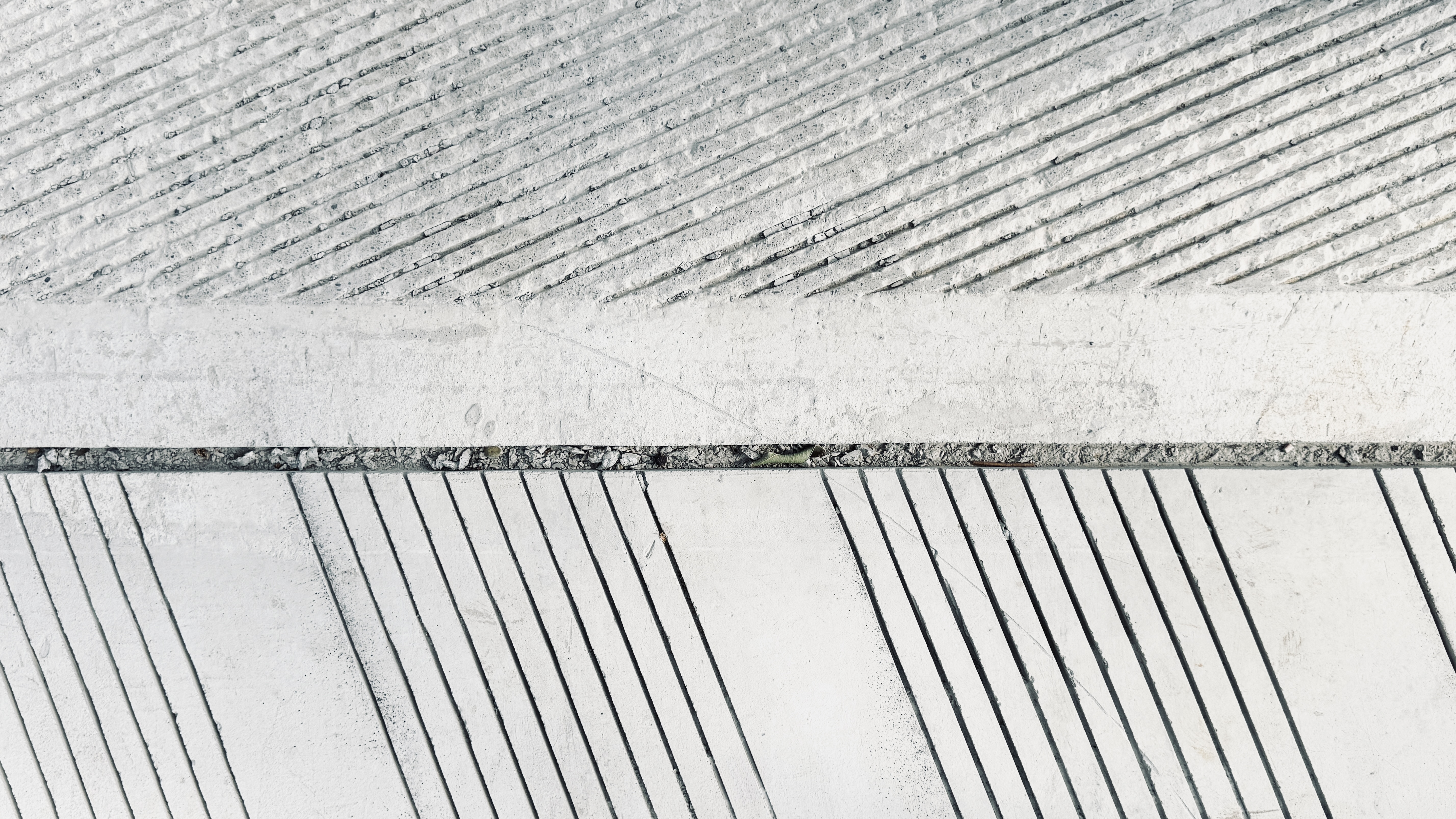
The main path and trails feature hand-brushed textures (at 1 cm/3 mm spacing), while plazas use machine-cut brushing (20 cm/10 cm/at 2 cm/3 mm) to create a more uniform urban finish. The orientation of the surface textures enhances slip resistance and walking direction, while construction joints (approx. at 4 m) were planned based on material behavior to ensure durability and visual coherence.
5. Rainwater Management and Soil Recharge
A 2 cm height difference between paving and lawn allows runoff to naturally flow into the grassed areas. Low points in the lawn are equipped with catch basins to extend water retention time, facilitating infiltration and increasing soil moisture, resulting in a drainage system that is both resilient and ecologically beneficial.
6. Seating Strategy Rooted in Daily Use
Street furniture includes modular terrazzo seats, linear low-wall seating, and backed benches. Placement was carefully considered based on shade, duration of use, sightlines, and social interaction. These seats are distributed along pathways, beneath trees, near nodes, atop green mounds, and at park entrances, encouraging spontaneous and comfortable resting moments.
7. Upgraded Sports and Public Amenities
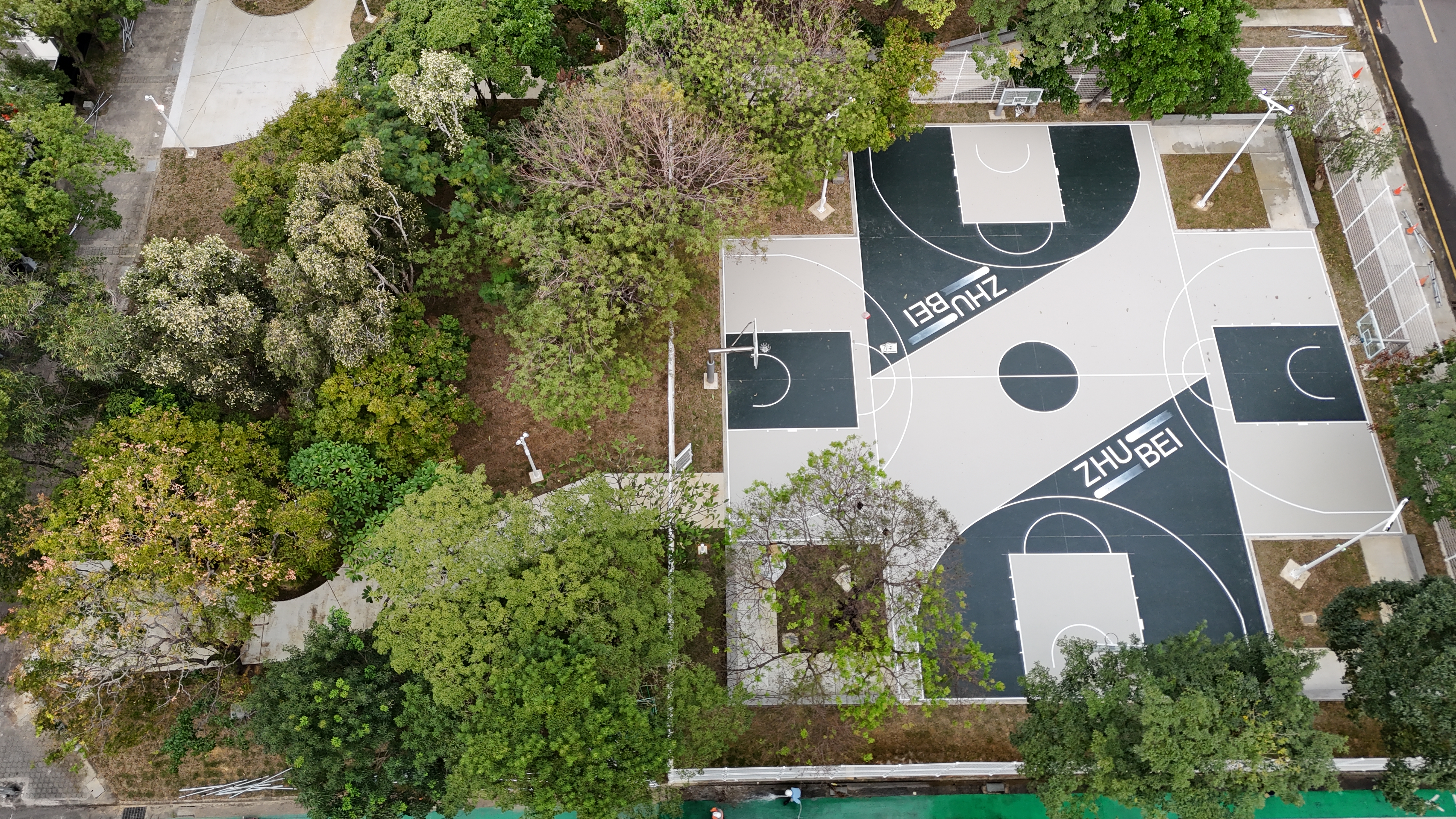
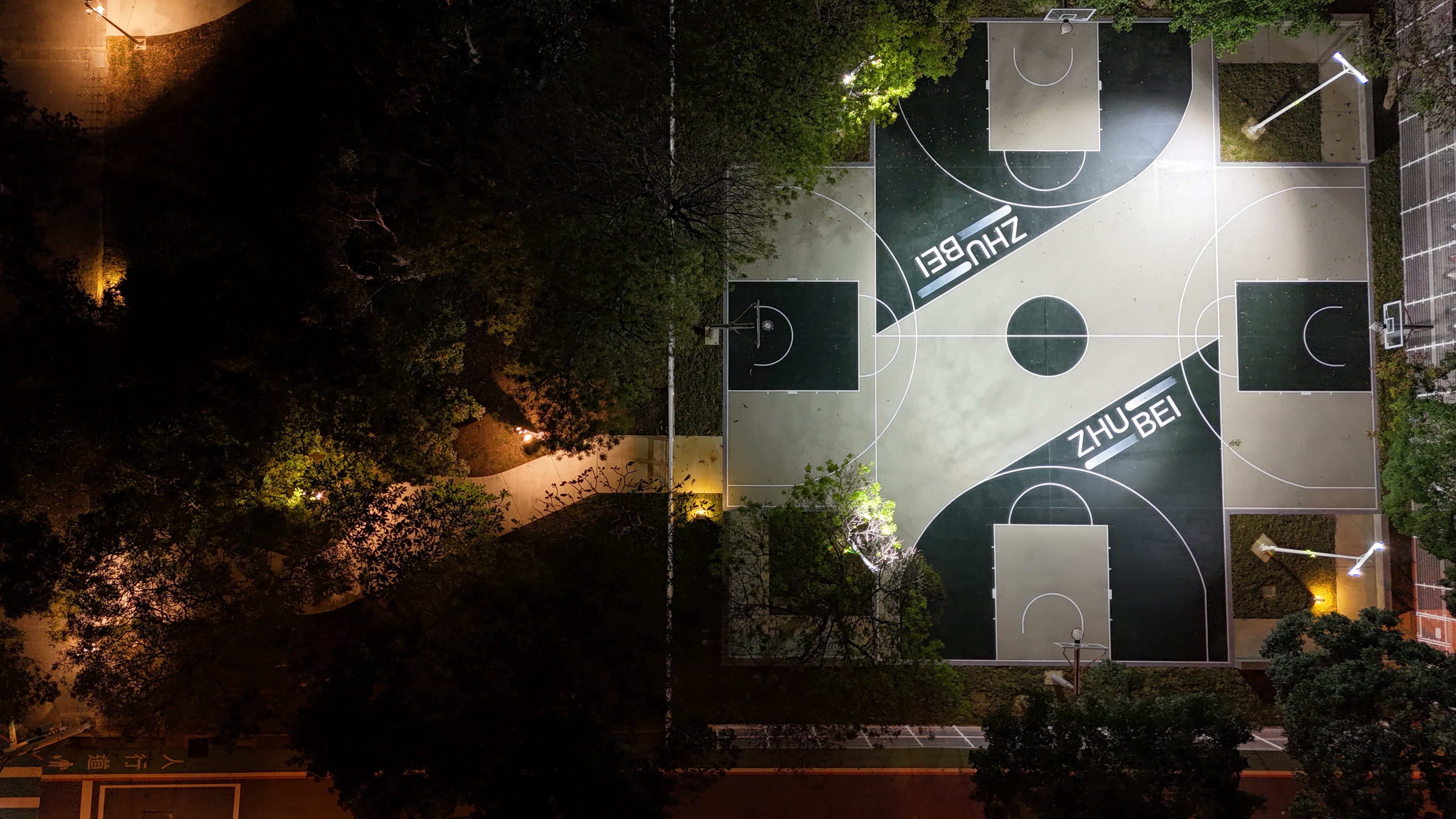
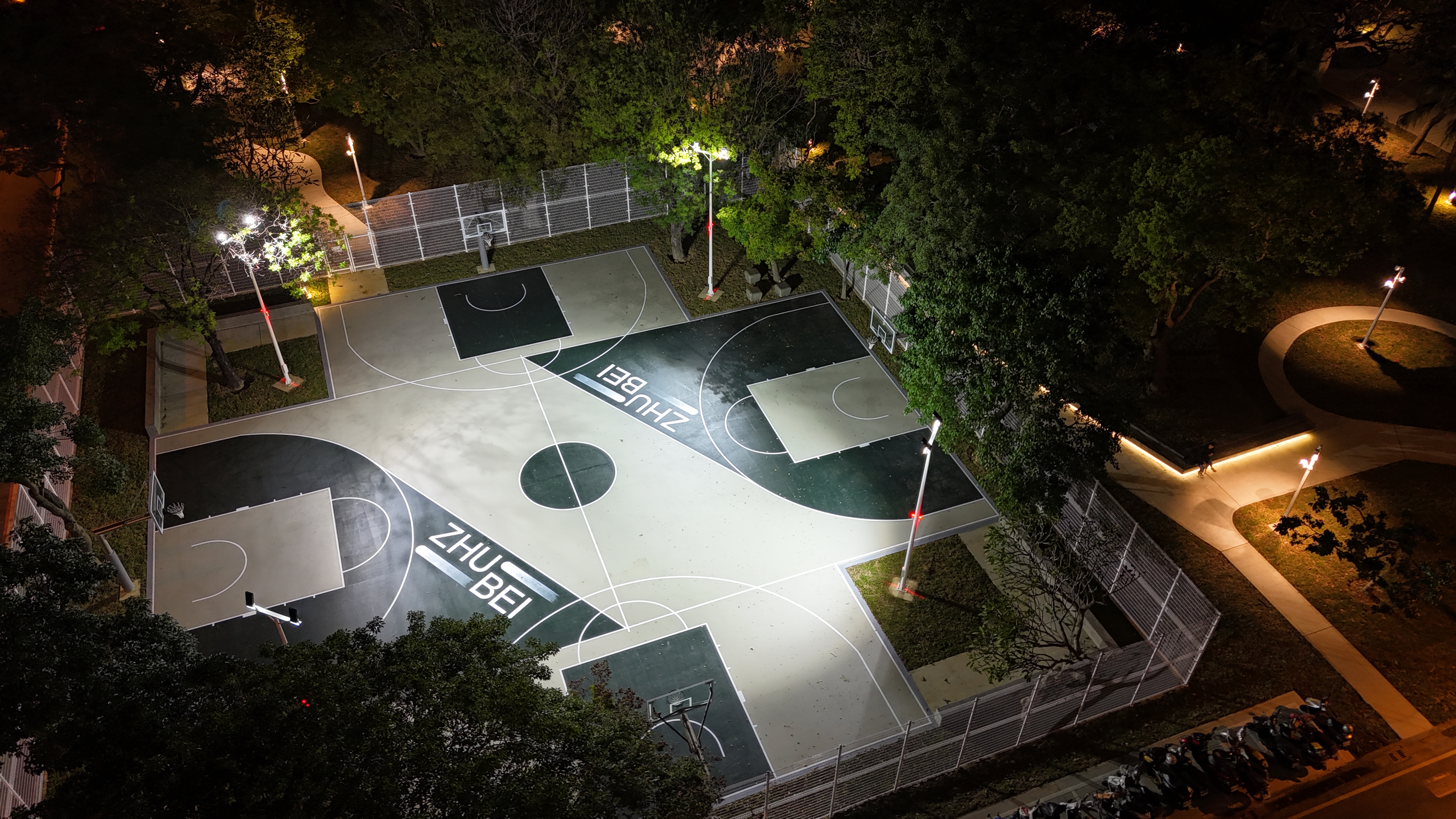
The existing cross-shaped basketball court was fully resurfaced, with improved sub-base and top layer, accompanied by upgraded lighting and adjacent seating to enhance safety and user comfort.
Reborn with an open, gentle, and breezy landscape character, the renovated park welcomes citizens back to stroll freely, linger at their own pace, and reconnect with the city. This renewal of urban green space—revitalized in the movement of wind—embodies the project’s vision and intent.
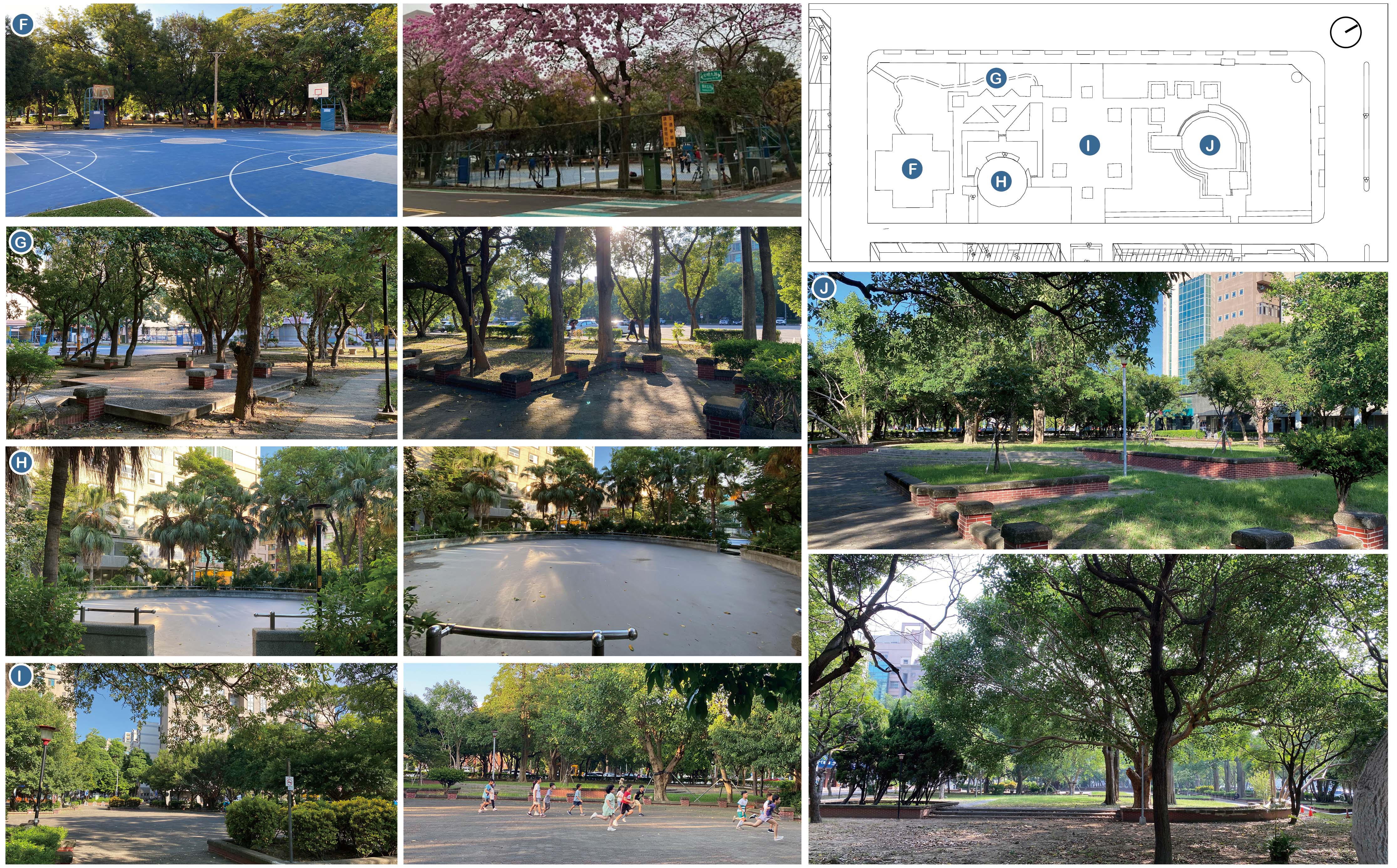
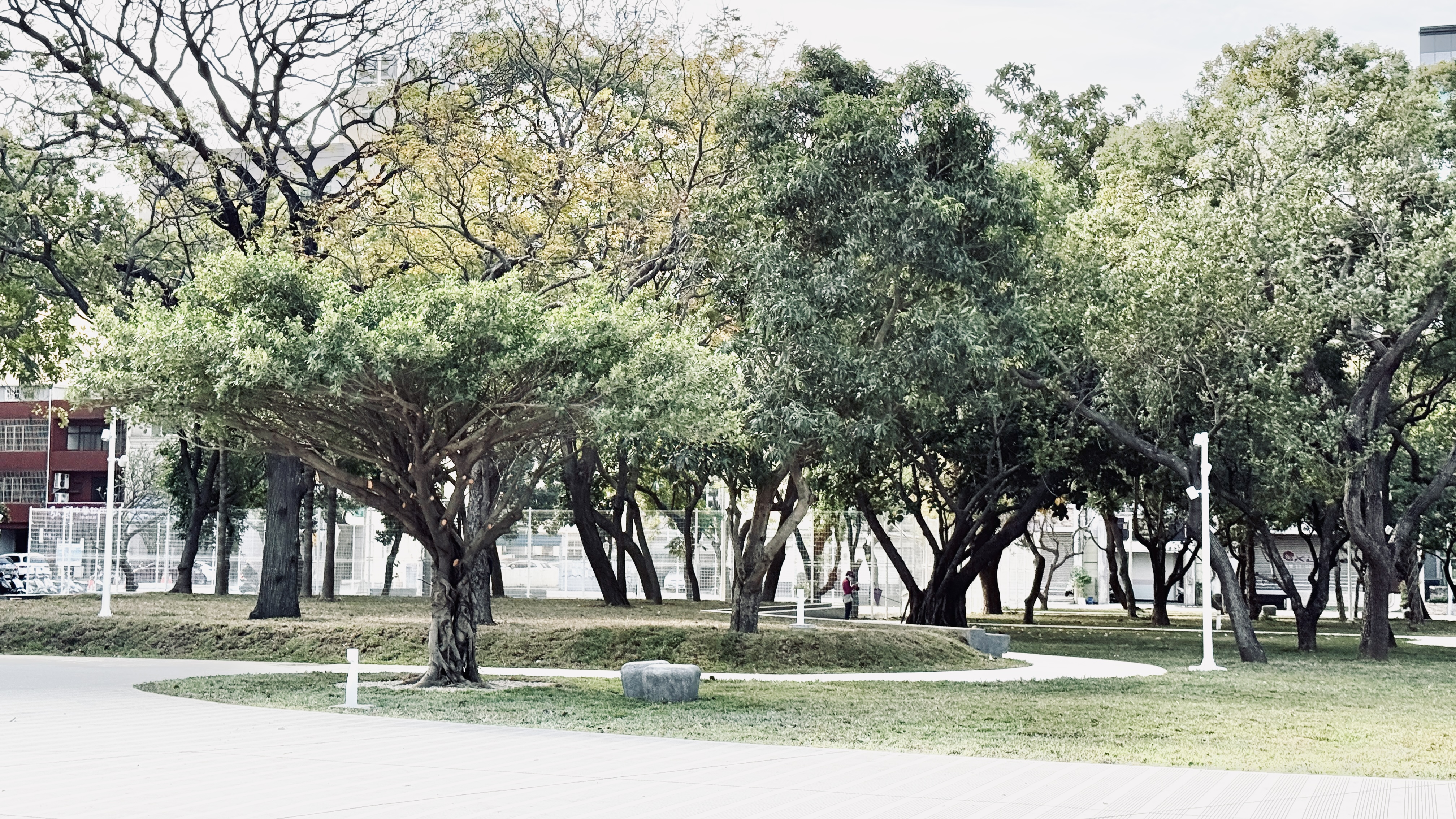
改善前現況環境灰暗、擁擠/地坪高低不平積水/喬木密度過高
Before improvement, the environment was dim and congested. The ground surface was uneven and prone to water accumulation. The density of existing trees was excessively high.